Water is everyone’s business

The European Alliance to Save Energy is one of the undersigned organisations and businesses​ that stand with the 375,000 European citizens who have urged the EU governments and the European Commission to preserve the European Union’s groundbreaking Water Framework Directive in its current form, as advocated by the #ProtectWater campaign.

The Water Framework Directive is the key law to ensuring that freshwater ecosystems in Europe are protected and restored and water is sustainably managed, fully supporting the achievement of the Sustainable Development Goals.

This law has provided a stable regulatory framework and has encouraged collective water stewardship action in river basins across the EU.

The joint statement is signed by:

AquaFed, Aqualia, Compagnie Intercommunale Liégeoise des Eaux, The Coca-Cola Company, Coca-Cola European Partners, Coca-Cola Hellenic Bottling Company, Dupont Water Solutions, Ecolab, European Alliance to Save Energy (EU-ASE), European Fishing Tackle Trade Association, European Outdoor Conservation Association, Greencore, Grundfos, H&M Group, Heineken, Knauf Insulation, Kyoto Club, NVP Energy Solutions, Suez, Veolia, WAKEcup Global, Water Europe, and Xylem.
 

Read the full statement

Follow us


Privacy Policy

© All right reserved

EU-ASE response to the Inception Impact Assessment on the Industrial Emissions Directive

European Alliance to Save Energy (EU-ASE) welcomes the opportunity to provide feedback to the European Commission’s publication of an inception impact assessment on the revision of the Industrial Emissions Directive (IED). 

While we believe the Directive has been responsible for solid progress against identified air and water pollutants, and the BREF process has contributed to identifying Best Available Techniques, in its current form the Directive is not able to contribute toward EU ambitions for climate neutrality. 

Based on this, EU-ASE would like to highlight the following recommendations to support the Commission in its ongoing work on the IED’s revision.

1. Broadening of the scope 

A change in scope is needed so that the IED becomes part of the EU’s arsenal for climate neutrality. The IED should not only look at industrial emissions from a qualitative perspective, instead it should go further and focus on use of resources in industrial manufacturing processes, circular economy and the reuse of resources in to order to have a real impact. 

2. Making the Energy Efficiency BREF mandatory for all sectors 

There is a general consensus that the Energy Efficiency BREF has not been made a priority focus in the past and needs strengthening of the requirements to reduce energy losses. Its implementation needs to be made mandatory for all sectors, taking into account the Energy Efficiency First principle. 

3. Tackling water scarcity and efficiency needs by reducing water consumption 

The issue of water scarcity and efficiency needs to be tackled before it becomes a larger, more critical issue for industry. In Europe, more than 50% of fresh water abstraction is for industrial purposes. While we welcome the inclusion of water reuse in the existing BREFs, the reduction of water consumption has clearly not been a key environmental issue addressed by the BREF technical committees as only 20 BAT conclusions (out of 850 in total) have included water usage reductions or increasing water reuse. 

4. Focusing on the energy-water nexus 

We believe that the IED should give greater priority to water consumption with a focus on reuse under circular economy principles. This should include a focus on water and heat in industrial processes (the “energy-water nexus”) where water efficiency leads to energy savings and emissions reductions.

5. New policy objectives 

We would like to see water efficiency and water reuse in industrial processes, waste water minimisation, and the digitisation of water management in industry become policy objectives of the IED. 

6. Horizontal BREF on water efficiency and reuse 

The Commission could consider developing a horizontal BREF on water efficiency and reuse to mainstream these practices across European industries. 

7. Fit for innovation and new technologies 

The slow incremental nature of the “available techniques” needs to be addressed to better promote innovation, and BREFs require a mechanism to adapt more quickly to rapidly advancing technologies (there is no backwards compatibility). 

8. Encourage behavioral change and incentive mechanism 

The Commission should seize this opportunity to encourage behavioural change amongst industry leaders and provide incentive mechanisms to help them realise the different benefits of water and energy efficiency measures (water, energy, emissions and industrial competitiveness).


Download the full response

Follow us


Privacy Policy

© All right reserved

EU-ASE response to the Inception Impact Assessment on the 2030 Climate Target Plan

As European businesses and investors having energy efficiency and energy demand reduction at the heart of our activities, we strongly support President Ursula von der Leyen’s commitment to set the EU on a path to becoming the world’s first climate neutral continent by 2050 at the latest.

In view of this goal, we believe that the 2030 greenhouse gas emissions reduction target must be increased from the current 40% to at least 55% because a more ambitious target will put the EU on a more gradual and sustainable pathway to climate neutrality by 2050. An increased 2030 target is also critical because it reflects the absolute urgency, underlined by the IPCC latest Special Report on the impacts of global warming, to address climate change and reduce to minimum GHG emissions in the next ten years.

A growing number of Member States are already committed to increasing their climate ambition. A target of at least 55% by 2030 at the EU level is also feasible from both technical and economic point of view and, according to the European Commission’s own analysis, it is likely to lead to a net increase in GDP of 2%, a surge in employment and a reduction in costs linked to fossil fuel imports and health damages.

We believe that increasing the 2030 GHG target to at least 55% requires a comprehensive assessment which will consider the impact of such policy decision both in terms of direct benefits (e.g. employment, reduced energy costs and import dependency, competitiveness) as well as avoided costs (e.g. environmental damages, health costs, fossil fuel subsidies). We are also convinced that such assessment should be based on the analysis of the European energy infrastructure needs and must fully apply the energy efficiency first principle to prevent lock-in into carbon-intensive future pathways.


Download the full response

Follow us


Privacy Policy

© All right reserved

Joint call to EU leaders: #EUGreenRecovery to restart Europe

Europe’s renewable energy and energy efficiency businesses call to fully integrate the proposed economic stimulus packages and the European Green Deal.


Dear Members of the European, national and local Parliaments,

Dear Presidents, Dear Heads of States and Governments,

Dear Commissioners, Dear Ministers,

Dear leaders of Europe,


The immediate and necessary, yet unprecedented measures currently taken to fight the COVID-19 pandemic have brought Europe’s economy to a near-to-complete standstill.

The signatories of this letter represent millions of employees from Europe’s renewable energy and energy efficiency value chains across the electricity, heating, cooling, building and transport sectors as well as supportive associations.

We call on the EU Commission to:

  • Fully integrate the proposed economic stimulus packages and the European Green Deal (as proposed by the European Council last week). Investments in a zero-carbon infrastructure and innovative solutions are the best and most cost-effective route to economic recovery on a national and supranational level while at the same time preparing the grounds for a secure and sustainable energy system.
  • Bring forward the necessary investments for rapid recovery.
  • Use the stimulus packages to accelerate investments in energy efficiency, renewable heating and cooling, electricity, mobility, zero-carbon buildings, and industrial processes.
  • Ensure ongoing supply of clean energy and ongoing investments in energy transition can continue in the current pandemic as essential services.

We stand behind the European Green Deal and urge you to create this link with the immediate stimulus packages. Today’s action addressing health and climate challenges across all policy areas and sectors will improve the well-being of citizens and the climate while strengthening Europe.

COVID-19 has forced the world into an economic pause. Now, you have the power to use the Green Deal to restart Europe and drive its economy with a focus on energy efficiency and renewable energy across all sectors. Such investments are both labour-rich and shovel-ready.

The renewable energy, flexibility and energy efficiency solutions industries are now cost-competitive and can sustain local jobs across Europe. With a strong European manufacturing base, Europe can show world-wide industrial leadership.

We trust you to take the right decisions. Our joint industries and associations are committed to making a green economic recovery a collective success.


Yours sincerely,

Follow us


Privacy Policy

© All right reserved

EUASE welcomes climate neutrality and energy efficiency in EU climate law, regrets lack of engagement on 2030 target

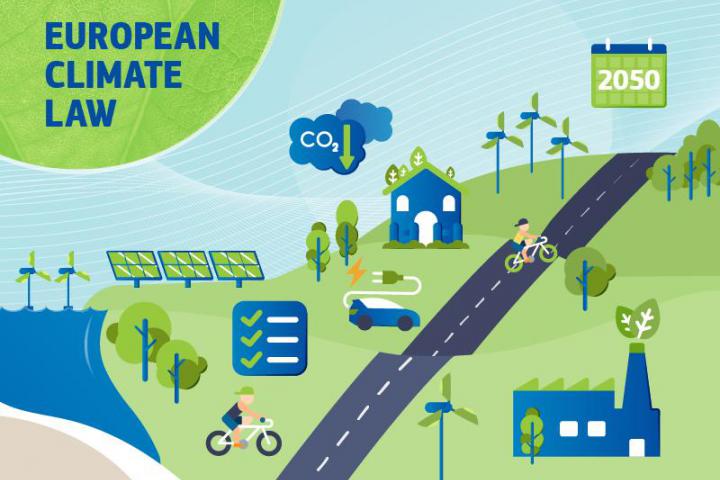
Brussels, 4 March 2020 – Today the European Commission unveiled its proposal for a European Climate Law, which enshrines the goal of climate neutrality by 2050 into EU legislation. The text establishes that, when setting a trajectory to reach such a goal, the Commission shall take into consideration “energy efficiency, energy affordability and security of supply” among other elements.

We welcome the fact that the climate law enshrines the climate neutrality objective into EU legislation. We are also glad to see that the Commission will have to consider energy efficiency when setting the EU trajectory towards climate neutrality” – said Monica Frassoni, President of the European Alliance to Save Energy (EU-ASE). “We look forward to continuing to work with EU institutions and Member States to highlight how Energy Efficiency First is an indispensable principle to reduce emissions, integrate RES, and achieve a fast, fair and cost-effective transition to a climate neutral EU,” she added.

We do regret nevertheless that the Commission did not already include an intermediate emissions reduction target of at least 55% by 2030, considering the urgency of the situation and the devastating impact of climate change on our economies and societies,” President Frassoni stated. “We are also disappointed to see that the impact assessment is confirmed for September 2020. We believe that such assessment should be ready by June at the latest to let the EU take the lead in the next global meeting on climate change happening at the COP26 in Glasgow. We call on the EP and Council to improve the current draft during the upcoming legislative process.”


Media contact:

Matteo Guidi

+32 493 37 21 42 – matteo.guidi@euase.eu

Follow us


Privacy Policy

© All right reserved