10 years and going strong – 2021 in review

2021 has been another intense year for energy efficiency and Green Deal related issues. It was also a special one for the European Alliance to Save Energy (EU-ASE) as we celebrated our 10th anniversary.

Throughout the year, the Alliance worked hard to implement an ambitious workplan which involved all members and was structured around four objectives:
• Energy efficiency boosted by policy and regulatory framework
• Unleashing the energy savings potential of water efficiency in EU legislation
• Financing energy efficiency
• Smart, digital and effective communication to achieve advocacy objectives

In a context still marked by the Covid-19 pandemic, EU-ASE was able to effectively support the promotion of energy efficiency to achieve sustainable recovery and meet the EU’s energy and climate goals.


Read the full report

Follow us


Privacy Policy

© All right reserved

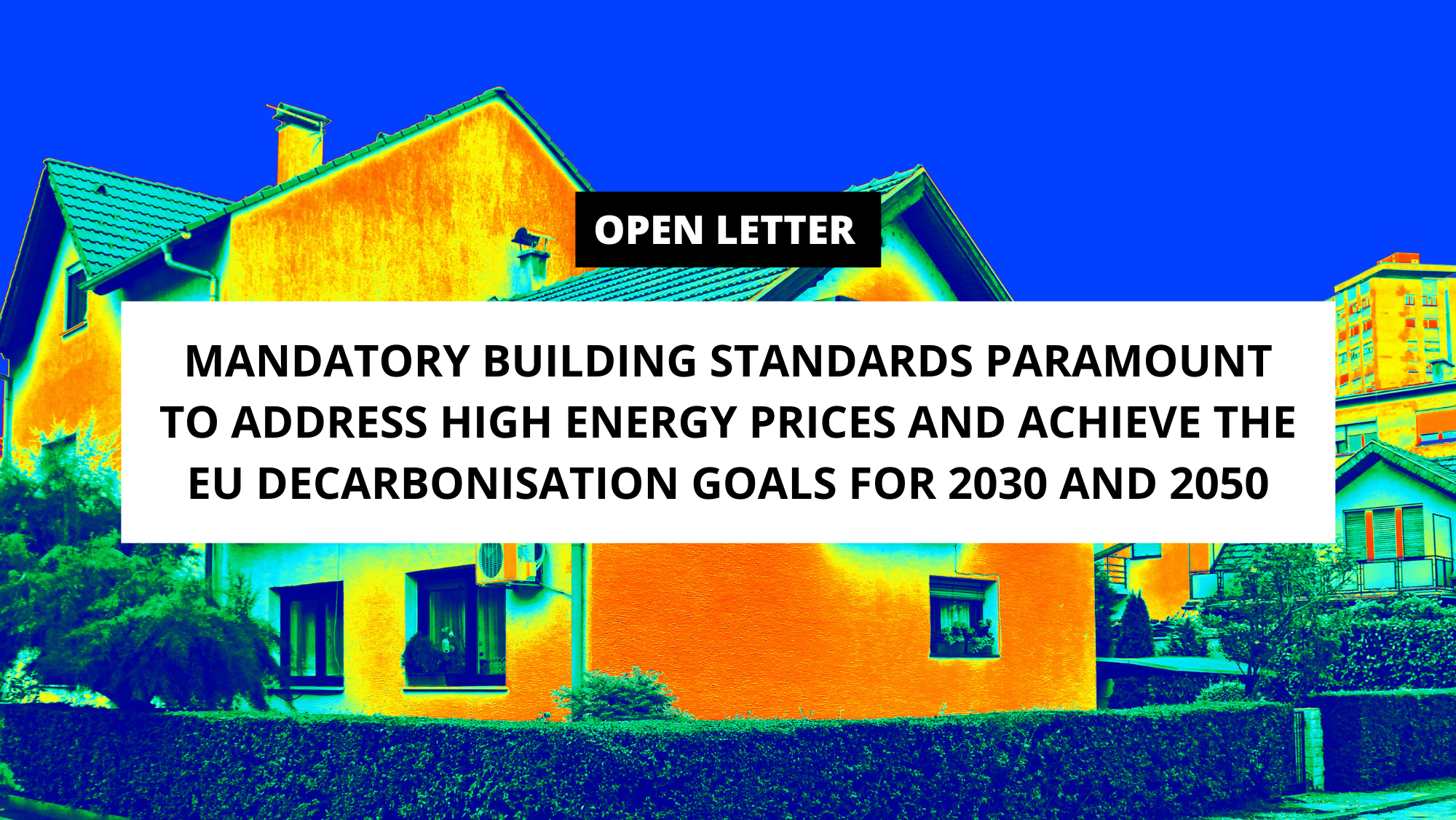
MEPS paramount to address high energy prices and achieve the EU decarbonisation goals

Business organisations call for the introduction of mandatory Minimum Energy Performance Standards for the renovation of the buildings sector in the revision of the Energy Performance of Buildings Directive.

Today, together with major business organisations advocating for energy efficiency solutions in Europe, we addressed a letter to energy Commissioner Kadri Simson regarding the incoming revision of the EPBD.

The EU building stock must undergo a profound renovation to make it energy efficient and cut emissions. The Renovation Wave strategy foresees that the rate of building renovations must at least double to achieve our climate objectives. Renovating buildings is also the best medium and long-term solution to maintain energy prices low for consumers.

The introduction of mandatory minimum energy performance standards for all buildings is essential for the EU to deliver on its promises to make the European Green Deal as Europe’s growth strategy.

These standards can create the necessary regulatory framework to attract public and private investments, boosting the construction value chain and making the sector attractive to fill the skills gap.

Read the full letter here

Follow us


Privacy Policy

© All right reserved

Key energy stakeholders call for an ambitious revision of the EPBD

Together with 12 leading energy associations, the European Alliance to Save Energy calls on the European Commission to boost the decarbonisation of the EU building stock through an ambitious revision of the Energy Performance of Buildings Directive. 

Buildings are a key part of the energy system, but most of them are energy inefficient and 75% of buildings’ energy consumption is still based on fossil fuels. The revision of the Energy Performance of Buildings Directive (EPBD) is “make or break” occasion to decarbonise a sector that has to cut its emissions by 60% by 2030. 

In a joint letter addressed to Kadri Simson, EU Commissioner for Energy, and to Frans Timmermans, First Executive Vice-President of the European Commission, the European Alliance to Save Energy (EU-ASE) calls on the Commission to ensure that the EPBD revision leads the way to make our buildings energy efficient, renewables-based, flexible and integrated in the energy system. 

To support this objective, together with the co-signatories, EU-ASE recommends including the following provisions in the EPBD: 

  • Apply the Energy Efficiency First Principle to stimulate renovations aiming at highly energy efficient, renewable-based and flexible buildings integrated in the increasingly variable energy system. 
  • Ensure all new buildings are both highly efficient and renewable-based from 2025 onwards. 
  • Introduce a binding target on EU Member States to reach annual integrated renovations of at least 3% per year. 
  • Introduce mandatory Minimum Energy Performance Standards (MEPS) for all existing buildings to accelerate the rate and depth of renovations.  
  • Accompany MEPS with easily accessible support measures targeting lower-income households and businesses.  
  • Strengthen and harmonise Energy Performance Certificates (EPC) to become a reliable instrument to support the uptake of building renovations and drive the deployment of clean energy solutions. 
  • Include recommendations in EPCs on how to improve a building’s energy performance through energy efficiency measures and the deployment of digital and decentralised energy resources. 
  • Support the cost-effective integration of the increasingly electrified building and transport sectors by strengthening the existing e-mobility provisions . 
  • Provide better technical assistance, including to local and regional authorities, on the use of available funds and build capacity to increase demand and reduce hurdles. 

Read the full letter here

Follow us


Privacy Policy

© All right reserved

Open letter: EU Taxonomy should recognise key role to increase energy efficiency of electrical and industrial solutions

In response to the Platform on Sustainable Finance’s consultation on preliminary recommendations for technical screening criteria for the EU taxonomy, the European Alliance to Save Energy (EU-ASE) addressed in an open letter the European Commission asking to recognise the key enabling role to increase energy efficiency of electrical and industrial solutions.

The letter says:

In May 2018, the European Commission published its action plan on sustainable finance which, among other elements, included a proposal to create a unified EU classification system (EU Taxonomy). We support this initiative that will provide greater clarity to investors on what can be genuinely considered sustainable economic activities. In order to fully deliver on the goals of the taxonomy, its technical screening criteria must include all the most beneficial and sustainable solutions available on the market.

Electrical equipment and industrial automation equipment and systems are key enabling technologies to deliver on energy efficiency and electrification. According to the Intergovernmental Panel on Climate Change (IPCC), the electrification of heating, transport and industry is essential, and the share of electricity should reach at least 60% in 2050 to keep global warming well below 1.5 °C.

Electrical equipment which helps control, command and optimise the electricity system is crucial because it improves energy efficiency, streamlines energy demand and supply, and supports the integration of renewable energies. Currently, there are about 8 billion electric motors in use in the EU, consuming nearly 50% of the electricity produced in the Union. Thanks to industrial automation technologies such as variable speed drives, highly efficient contactors and industrial control and automation, it is possible to achieve significant energy savings. For example, in Germany, demand-driven automation technology could deliver additional energy savings of between 10 % and 25 % in machines and plants.

For the reasons exposed above, we believe that it is essential that the EU taxonomy rightly recognises the enabling role of this industry for climate change mitigation, and we stress that:

  1. The full chain of electrical equipment from high voltage, medium voltage and low voltage should be covered in the manufacturing section, ensuring a comprehensive approach
  2. The enabling role of the electrical equipment as a system should be captured as a system. So, the eligible equipment should not be limited only to connected ones, missing other pieces needed to make the full system work.
  3. Industrial automation equipment and solutions should be included in the manufacturing section, either with a dedicated section or under the same section than electrical equipment.


Read the full letter here

Follow us


Privacy Policy

© All right reserved

Commission strengthens EU energy efficiency rules, lacks ambition on targets

The European Commission unveiled today its “Fit for 55” package to adapt the EU’s energy and climate legislation to the new goals of reducing emissions by at least 55% by 2030 and reach climate neutrality by 2050. The package includes the key proposal to revise the Energy Efficiency Directive (EED).

The EED proposal contains a number of positive elements. First of all, it enshrines the Energy Efficiency First principle (EE1st) in the Directive, introducing the much-needed obligation to apply the principle in the decision making of energy and non-energy sectors.

Other important elements are the extension of the public owned building renovation obligation to all public bodies, as well as the introduction of a new obligation to cut energy consumption of public bodies by at least 1.7% annually until 2030.

The revised Directive reinforces the annual energy savings obligations target after 2024 by 1.5%, almost doubling the current obligation. It also excludes the accountability of direct fossil fuel combustion technologies and clarifies that a reduction of the energy use through measures under the ETS cannot count towards the fulfilment of the energy savings obligation.

The European Alliance to Save Energy (EU-ASE) welcomes the Commission’s proposal to level up its ambition on the EU energy efficiency rules. By acknowledging the Energy Efficiency First principle, the Commission recognises its crucial role to drive a fast and fair transition in energy and non-energy sectors. However, we regret that the Commission chose not to propose binding national targets on energy efficiency; furthermore, we are critical of the Commission’s decision to propose an EU wide energy efficiency target that, even if mandatory, is not aligned with the EU decarbonisation pathway. The Commission introduces a 36% target for final energy consumption, which does not catch the cost-effective opportunities stemming of at least 40% energy efficiency target by 2030.

Monica Frassoni, President of the European Alliance to Save Energy said:
The latest extreme weather events around the world and the ongoing Covid-19 pandemic show that there is no time left for half measures on climate and on economic recovery. The EU Energy Efficiency Directive must be fit for Europe’s decarbonisation goals as well as foster economic activities aiming at increasing efficiency in buildings, industry, and transport. In this sense, we think that the proposed targets should have been more ambitious. We will be working over the next months to demonstrate to the co-legislators that delivering on ambitious energy efficiency targets and fully applying the Energy Efficiency First principle is essential if the EU wants to be credible about reaching climate neutrality in time and avoid the worst effects of climate change. We hope that the European Parliament and the Council will further improve the current proposal”.

Harry Verhaar, Chair of the board of the European Alliance to Save Energy and Head of Public and Government Affairs at Signify said:
“To be able to fully unlock the multiple benefits of energy efficiency across the continent we need an ambitious EU legal framework. We welcome the revision of the Energy Efficiency Directive, which comes at a timely moment for Europe’s green recovery and clean energy transition. In particular, we praise the Commission for strengthening the provisions on the Energy Efficiency First principle. The principle needs to guide policymakers and investors in all energy planning, policy, and investment decisions. Energy efficiency is a powerful driver of sustainable economic growth and it is key to speed up our journey to a decarbonised Europe”.

Bertrand Deprez, Vice-Chair of the board of the European Alliance to Save Energy and Vice-President EU government affairs at Schneider Electric said:
“Energy efficiency is the indisputable driver to reach at least a -55% GHG emissions cut in the next decade. The European Commission proposal goes in the right direction, with very promising measures to accelerate energy efficiency efforts at end-use level, including the extension of renovation obligations to all public buildings. Yet, achieving the EU ambition for 2030 without tackling the renovation of the entire existing stock is ‘Mission: Impossible’: we need to extend it to all non-residential buildings.”

Bonnie Brook, Vice-Chair of the board of the European Alliance to Save Energy and Senior Manager Industry Affairs Building Automation at Siemens said:
“Enhanced criteria for energy audits and energy management systems are very encouraging. They should leverage the opportunities brought by the current advanced level of digitalisation. Smart technologies should be widely deployed to enable monitoring, analysis and evaluation of the energy performance as well as the progress to the carbon-free future”.

Ahead of the publication of the proposal, the European Alliance to Save Energy provided to the European Commission its recommendations on how to make the EED “fit for 55%”. The Alliance looks forward to working together with the European Parliament and the Council during the co-legislation period to ensure that the Directive is ambitious and comprehensible.

According to the International Energy Agency’s Global Net Zero Roadmap for the Energy sector, the path to global net zero emissions implies a global push in energy efficiency gains resulting in the annual rate of energy intensity improvements averaging 4% to 2030 – about three times the average over the last two decades.

Download the Pdf version

Media contact:
Antoan Montignier
Policy and Advocacy Advisor
antoan.montignier@euase.eu
+32 499 84 97 28

About us
The European Alliance to Save Energy (EU-ASE) aims to advance the energy efficiency agenda in the European Union. The Alliance allows world’s leading multinational companies to join environmental campaigners and a cross-party group of Members of the European Parliament. EU-ASE business members have operations across the 27 Member States of the European Union, employ over 340.000 people in Europe and have an aggregated annual turnover of €115 billion.

Follow us


Privacy Policy

© All right reserved