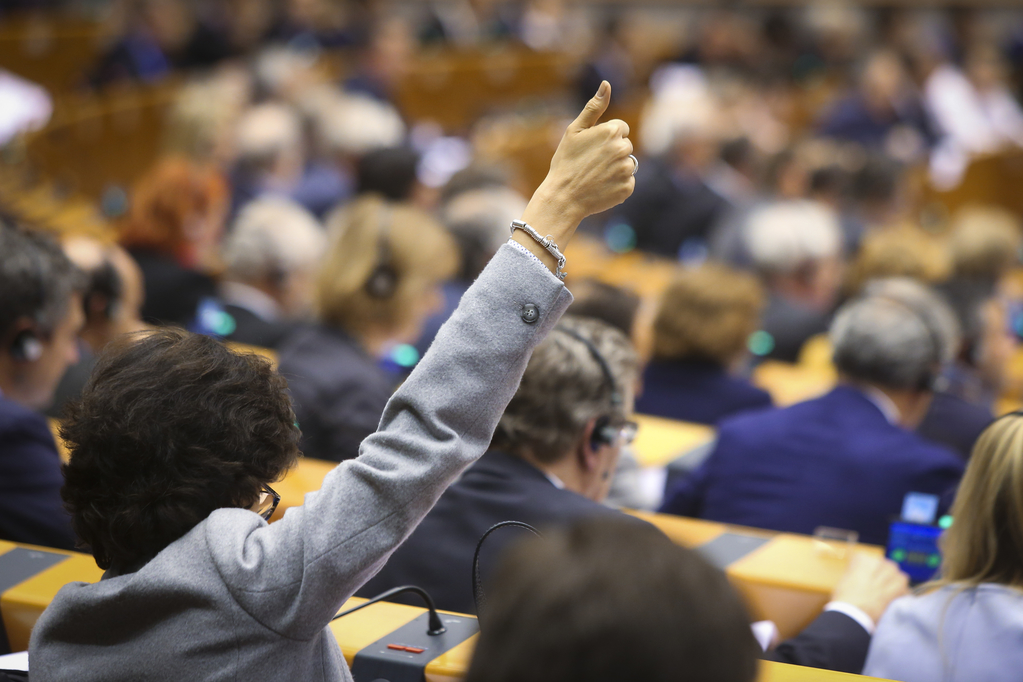
Letter calls upon the REGI Committee to exclude fossil fuels from the Just Transition Fund

Dear Member of the REGI Committee, 

We call on you to vote in favour of a better future for communities by voting for regions to leap forward, not backwards. In your vote on the 6 July, we ask the REGI Committee to exclude fossil fuels from the Just Transition Fund – including fossil gas – and support a just transition for all. 

Fossil gas is a fuel with substantial CO2 and methane emissions contributing to climate change and its catastrophic impacts on people and biodiversity. Methane is 86 times more potent than carbon dioxide (CO2) over a 20-year period, making it the second most important greenhouse gas, contributing to 25% of warming experienced today. 

Fossil gas infrastructure is also not compatible with most renewable gases, and almost certainly not for renewable gases at scale. The European Commission and the International Energy Agency (IEA) have successively scaled down gas demand projections for 2030. 

The EU’s Just Transition Fund is an integral part of the EU Green Deal. It has the potential to ensure that Europe’s transition to a climate neutral, resilient and healthy future leaves no region – or person – behind. But this requires a strong commitment to a climate-neutrality goal that would limit global temperature rise to 1.5°C. 

Communities have an opportunity to leap forward to a more sustainable, more resilient and healthier future away from carbon extractive industries. Investing in fossil gas comes with huge cost to the climate, Europe’s competitiveness and European societies. Meanwhile, renewable energy investments bring up to three times more jobs per euro invested than the same amount invested in fossil fuels – and renewable jobs are more likely to be local than those in fossil gas. 

It’s time to face the truth: fossil gas has no place in EU funds, including the Just Transition Fund. The Council realised this and so too must the Parliament.

Read the full statement

Follow us


Privacy Policy

© All right reserved

EU-ASE at the EU Sustainable Energy Week 2020

This year the EU Sustainable Energy Week (EUSEW) took place in an online and reduced format. As a proud partner of EUSEW 2020, EU-ASE contributed in different ways to the success of the event, as shown below.

Participation in the EUSEW 2020 main conference and side webinars:

  • Decisive action on energy poverty: solutions from across the EU – organised by DG ENER (European Commission) – Watch the recording here
  • Spurring Europe’s Renovation Wave – How #BetterBuildingsEU can contribute to #EUGreenRecovery – co-organised with smartEn, EuroAce, SolarPower Europe, EHPA, BPIE, EuropeOn and EBC – Watch the recording here
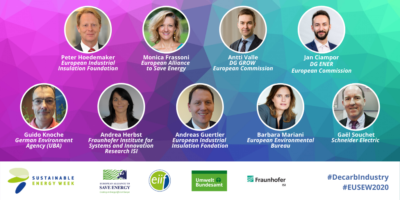
  • Decarbonising industry and the ICT sector: energy and CO2 saving potential in the short and longer term – co-organised with the European Industrial Insulation Foundation, the German Environment Agency (UBA) and the Fraunhofer Institute for Systems and Innovation Research ISI – Watch the recording here
  • Powering energy transition in rural communities through social and territorial innovationMore information here

Blog contributions:

  • Renovation Wave: the immediate and powerful recovery button at the fingertips of EU policymakersRead here
  • Smart and the city: energy efficiency and sector integration for a #carbonneutralEU Read here


Follow us


Privacy Policy

© All right reserved

German Council presidency should straighten out its energy priorities and include building renovations

Today the German Government unveiled its EU Council Presidency priorities which lack a clear reference to the building renovation. As businesses and investors having energy efficiency and energy demand reduction at the heart of our activities, we believe that the German government lost a great opportunity to prioritise a sector which, more than any other, can deliver economic growth, local jobs creation and GHG emission reduction.

“We welcome the German government pledge to learn from the current crisis to be better prepared for the future and the focus on climate change and digitisation. At the same time, we strongly encourage the inclusion of the construction sector and in particular the renovation of the European building stock among the Council presidency priorities” – said Monica Frassoni, President of the European Alliance to Save Energy (EU-ASE).

“For every million invested in the renovation of our homes we can create an average of 18 jobs. All the economic stimulus measures across the world address buildings. Finally the European Union is working on a flagship Renovation Wave initiative to trigger investments and accelerate the transformation of European society and economy towards climate neutrality. Therefore, it’s difficult to understand the decision to exclude buildings from the presidency’s priorities.”

“We have a lot of work to do to recover from the Covid-19 crisis and buildings must be at the centre of any rational energy, industrial and environmental strategy. With this in mind, we wish the German Government a successful presidency and look forward to constructive cooperation” – concluded Monica Frassoni.


Download the press release here (PDF)

Follow us


Privacy Policy

© All right reserved

Energy efficiency: green recovery ‘made in Europe’

by Monica Frassoni, President of the European Alliance to Save Energy (EU-ASE)

This article featured in the summer 2020 edition of European Energy Innovation magazine


The Covid-19 pandemic is highly impacting our societies and is a major shock for the European and global economy. In this difficult context, the European Union has the opportunity to relaunch its economy guided by its long-term climate commitments, namely becoming climate neutral by 2050, while at the same time providing support to its many citizens who suddenly lost their work and income.

The recovery packages being prepared should not only aim at countering the economic damage caused by the COVID-19 pandemic. They should prepare the ground for a more prosperous, resilient, and sustainable future for our continent and the world.

Energy efficiency can help policymakers address the multiple challenges we are all faced with.

Energy efficiency is paramount for climate mitigation. Through existing technologies, it is possible to reduce energy consumption, increase the efficiency of the entire energy system and accelerate the integration of renewables. According to the International Energy Agency (IEA), 76% of the European greenhouse gas emission reductions required to keep temperature increases below 1.5°C must come from energy efficiency.

In the European Union, energy efficiency is one of the pillars of the European Green Deal. In the recent proposal of a European Climate Law, energy efficiency is part of the defining elements of the EU’s trajectory towards climate neutrality by 2050. Along the same lines, the current political focus on buildings renovations indicates that the EU institutions recognize the economic, social and environmental impact of a transition towards a highly efficient building stock. Last but not least, the European Commission recently highlighted in its EU Industrial Strategy that reducing emissions across industry, namely the most energy-intensive ones, will greatly depend on the wide implementation of efficiency measures and on the Energy Efficiency First principle.

When it comes to industrial strategy, economic growth and job creation, indeed, the full application of the Energy Efficiency First principle to all energy policymaking, planning and investments, can be a real change maker for the energy efficiency value chain and, as a consequence of this, for the European economy.

Our continent hosts some of the most innovative and successful energy efficiency companies in the world. The members of the European Alliance to Save Energy are global “champions” that export technologies and drive innovation. Hundreds of other players, especially SMEs, operate in this field across Europe.

Read the full article in European Energy Innovation

Follow us


Privacy Policy

© All right reserved

EU-ASE at IEA’s 5th Annual Global Conference on Energy Efficiency

On 23 June 2020 EU-ASE president Monica Frassoni participated in the online panel debate “Learning from global best practice” as part of the International Energy Agency’s 5th Annual Global Conference on Energy Efficiency. Here is her full speech

I would like to thank the IEA for your excellent work to make the energy efficiency (EE) agenda credible at global level. About 10 years ago it gave a major global push to show the role and the amazing potential of EE in buildings, transport, and industry and this was a major help for all the EE business and social community in the EU. As EU-ASE we have often used this work to make our agenda stronger, as our work focuses mostly on the EU legislation, at a supranational level.

Referring to what Mr Mathur said before – that EE is like a plane and it takes effort for a plane to take off – well in the EU we are still in the middle of the take-off effort. We cannot say that we are tapping the great potential of energy efficiency to contribute to the clean energy transition and to climate neutrality. We will not be able to overcome the Covid-19 shock and reach climate neutrality without additional financial and legislative measures and a better implementation of the current legislation.

The EU is tight together by common political, legal, and financial instruments, expressed in regulations, targets, subsidies and incentives. This is the case also for EE.

Today, as a result of the current crisis, we are at a decisive moment There is a lot of political work at all levels, intense discussions and work within the EU institutions, Member States, businesses, and the NGO community to make sure that the recovery measures will take the right direction.

A lot of things still ne to be done to mainstream energy efficiency in EU policies. Still, I would like to mention three EU “best practices” that are relevant globally, even if we are still far away from having a clear picture of how successful these will be.

The European Green Deal, in which energy efficiency has a key role to play, is important because it is a deal, it is green, and it is European. The Green Deal works as a framework for the implementation of the current rules and sets a direction for the next EU legislation.

In terms of energy efficiency there are three policy initiatives which are crucial to accelerate EE in the coming years. One is the Sector integration strategy, to be published in July. The second one is the Renovation wave initiative, that for us is key. Many speakers already mentioned the importance of renovating buildings, well, for the EU, the Renovation Wave is a major instrument to reduce emissions by 2050 to make the EU climate neutral. Increasing the current rate of renovation by three times is the main challenge we have in front of us.

Moreover, there is an upcoming review of the Energy Efficiency Directive (EED), which needs to be revised to make it up to the climate targets. We would like to see that the EU sets a GHG target of at least 55% by 2030 to achieve the climate neutrality goal by 2050.

Another very important element which was mentioned by Minister Claude Turmes this morning concerns the EU budget and the Recovery plan. We believe there should be a clear earmarking of EU funds not only to climate activities but also to the renovation of buildings. There is still a huge risk that the Recovery Plan will put resources to activities which are not in line with the EU climate goals.

We also call to increase the “climate action quota” to 40% for the entire EU Budget. And to explicitly exclude from all EU funds any fossil fuel activities. Finally, a small note concerning hydrogen and the hopes that it is raising in the public debate. We see a lot of space for hydrogen in hard-to-decarbonise sectors, namely in transport, but the main solution in buildings remains energy efficiency.

To conclude, I can say that in the EU we have the framework, we have some best practices, but we still have a lot of work ahead to deliver the policies needed in the next 20 to 30 years.


The recording of the full panel is available here


Follow us


Privacy Policy

© All right reserved