EU-ASE’s 2025 in Review

In a fast-changing political and economic environment, 2025 was a year of continued efforts to strengthen security, stability, and competitiveness for European businesses.

Throughout the year, our work demonstrated that energy efficiency is not only essential to achieving climate goals, but also a key driver of innovation, energy independence and sustainable long-term growth across Europe.

We hope you enjoy reading this report as much as we enjoyed writing it.

Do you want to know more about our plan for 2026? Interested in joining? Contact us!

Read the full Activity Report here

Follow us


Privacy Policy

© All right reserved

In a fast-changing political and economic environment, 2025 was a year of continued efforts to strengthen security, stability, and competitiveness for European businesses.

Throughout the year, our work demonstrated that energy efficiency is not only essential to achieving climate goals, but also a key driver of innovation, energy independence and sustainable long-term growth across Europe.

Strong engagement with policymakers, combined with the successful organisation of the 4th European Energy Efficiency Day, highlighted the importance of collaboration and dialogue in advancing shared objectives. Partnerships across sectors and institutions remained central to delivering impact and shaping effective energy policies.

Looking ahead to 2026, we will intensify our efforts to secure the regulatory certainty that can accelerate the energy transition, while providing businesses with the investment confidence they need and strengthening Europe’s  competitiveness.

Read the full Activity Report here

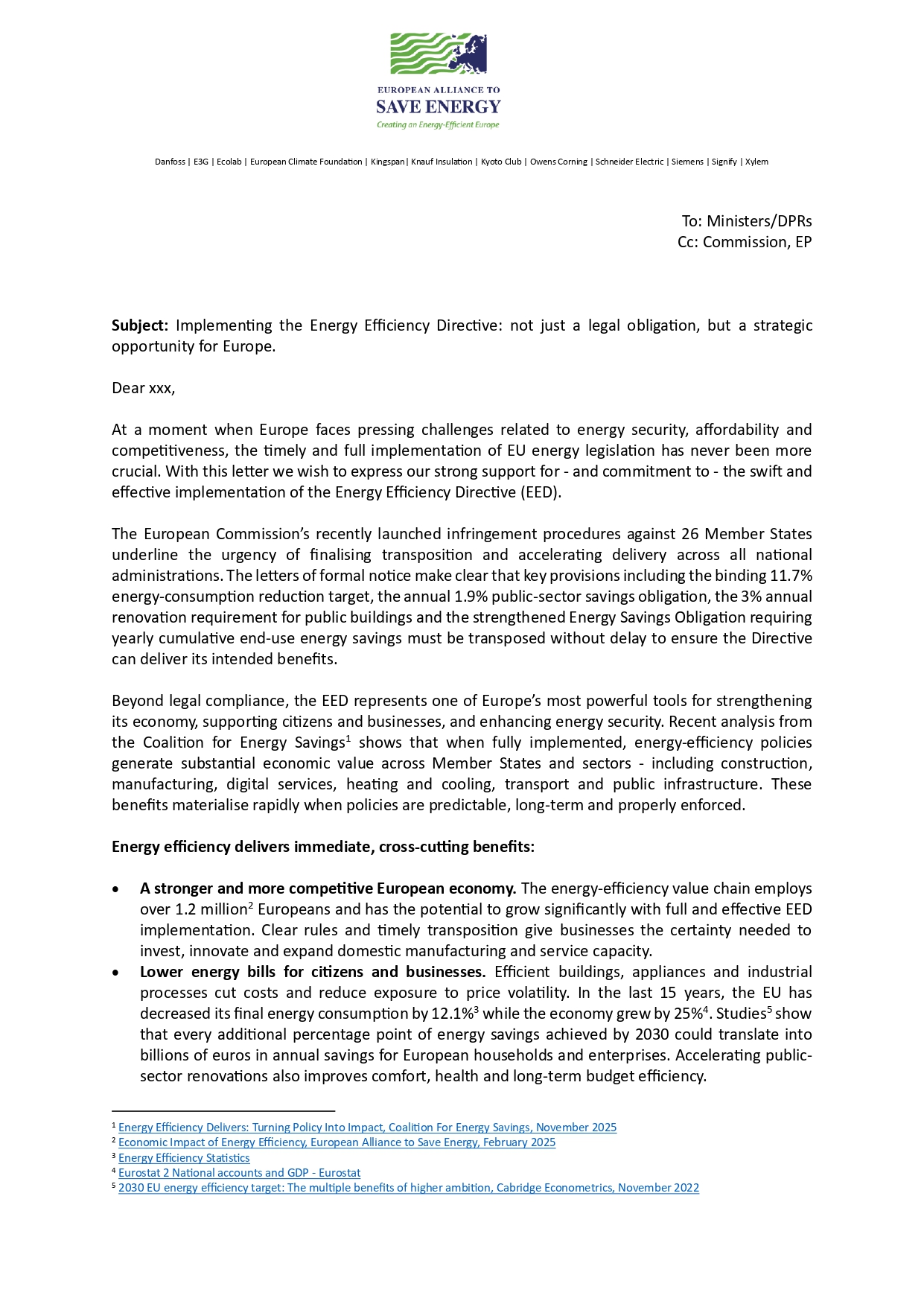
Implementing EED: not just a legal obligation, but a strategic opportunity for Europe.

EU-ASE has sent an open letter urging EU member states to accelerate implementation of the Energy Efficiency Directive. The energy efficiency sector already employs 1.2 million people in Europe and effective, timely transposition of the EED will unlock even more investment, innovation and domestic manufacturing.

Implementing energy efficiency measures, among other things:
• Lowers bills for citizens and businesses, with the EU already cutting energy use by 12% while growing its economy by 25%.
• Reduces system costs, alleviating pressure on grids and making electrification more affordable.
• Leads to energy security, with every 1% efficiency improvement cutting gas imports by 2.6%.
• Drives progress toward climate neutrality

We stand ready to support member states with any technical challenges in delivering the directive.

Read the full letter here


Follow us


Privacy Policy

© All right reserved

In a fast-changing political and economic environment, 2025 was a year of continued efforts to strengthen security, stability, and competitiveness for European businesses.

Throughout the year, our work demonstrated that energy efficiency is not only essential to achieving climate goals, but also a key driver of innovation, energy independence and sustainable long-term growth across Europe.

Strong engagement with policymakers, combined with the successful organisation of the 4th European Energy Efficiency Day, highlighted the importance of collaboration and dialogue in advancing shared objectives. Partnerships across sectors and institutions remained central to delivering impact and shaping effective energy policies.

Looking ahead to 2026, we will intensify our efforts to secure the regulatory certainty that can accelerate the energy transition, while providing businesses with the investment confidence they need and strengthening Europe’s  competitiveness.

Read the full Activity Report here

EU-ASE Response to the Electrification Action Plan Public Consultation

The European Alliance to Save Energy welcomes the European Commission’s efforts to develop an Electrification Action Plan.

Electrification must go hand in hand with energy efficiency to deliver a cost-effective, resilient and consumer-friendly energy system. All electrification measures should integrate energy efficient solutions that reduce demand, and enhance flexibility. Implementing the Energy Efficiency First principle is essential to make the best use of existing electricity grids, avoid unnecessary infrastructure costs and ensure a stable system.

Buildings and industry offer major opportunities. Promoting energy efficiency in buildings strengthens their ability to support demand response and contribute to system flexibility. Effective implementation of the EPBD and the EED is crucial to enable efficient electrification reduce energy needs and unlock the benefits of smart, flexible technologies.

Download the full response

Follow us


Privacy Policy

© All right reserved

In a fast-changing political and economic environment, 2025 was a year of continued efforts to strengthen security, stability, and competitiveness for European businesses.

Throughout the year, our work demonstrated that energy efficiency is not only essential to achieving climate goals, but also a key driver of innovation, energy independence and sustainable long-term growth across Europe.

Strong engagement with policymakers, combined with the successful organisation of the 4th European Energy Efficiency Day, highlighted the importance of collaboration and dialogue in advancing shared objectives. Partnerships across sectors and institutions remained central to delivering impact and shaping effective energy policies.

Looking ahead to 2026, we will intensify our efforts to secure the regulatory certainty that can accelerate the energy transition, while providing businesses with the investment confidence they need and strengthening Europe’s  competitiveness.

Read the full Activity Report here

EU-ASE Response to the Affordable Housing Plan Public Consultation

The European Alliance to Save Energy welcomes the European Commission’s efforts to develop an Affordable Housing Plan.

Affordable housing must be linked to energy efficient housing .Repurposing and renovation projects should systematically incorporate energy efficient retrofits, reducing energy demand, optimising consumption and lowering operational costs. This approach improves comfort, sustainability and affordability simultaneously.

Urban areas in particular offer significant opportunities: around 75% of existing buildings are inefficient, and most will remain standing in 2050. Effective implementation of the EPBD is therefore crucial to improve energy performance and reduce energy bills.

The EU framework, including the EPBD and Article 6 of the EED, provides clarity and stability for investment in affordable housing. The Plan should ensure full implementation across Member States to deliver both energy efficient and affordable homes for all Europeans.

Download the full response

Follow us


Privacy Policy

© All right reserved

In a fast-changing political and economic environment, 2025 was a year of continued efforts to strengthen security, stability, and competitiveness for European businesses.

Throughout the year, our work demonstrated that energy efficiency is not only essential to achieving climate goals, but also a key driver of innovation, energy independence and sustainable long-term growth across Europe.

Strong engagement with policymakers, combined with the successful organisation of the 4th European Energy Efficiency Day, highlighted the importance of collaboration and dialogue in advancing shared objectives. Partnerships across sectors and institutions remained central to delivering impact and shaping effective energy policies.

Looking ahead to 2026, we will intensify our efforts to secure the regulatory certainty that can accelerate the energy transition, while providing businesses with the investment confidence they need and strengthening Europe’s  competitiveness.

Read the full Activity Report here

Strengthening Europe’s industrial edge

We’ve joined over 130 businesses and investors in an open letter calling for the effective implementation of the Clean Industrial Deal to keep Europe competitive in the global clean tech race.

Ahead of the European Council meeting, we urge EU leaders to provide clear direction, stable regulation, and strategic investment to drive a fair and ambitious transition.

Our priorities:

  • 90% climate target by 2040
  • Affordable clean energy and electrification
  • Lead markets for low-carbon products
  • Accelerated cleantech deployment and investment
  • Circular economy as a strategic asset
  • A just and inclusive transition for all Europeans

Together, we can power a cleaner, more competitive Europe.

Read the full letter here.


Follow us


Privacy Policy

© All right reserved

In a fast-changing political and economic environment, 2025 was a year of continued efforts to strengthen security, stability, and competitiveness for European businesses.

Throughout the year, our work demonstrated that energy efficiency is not only essential to achieving climate goals, but also a key driver of innovation, energy independence and sustainable long-term growth across Europe.

Strong engagement with policymakers, combined with the successful organisation of the 4th European Energy Efficiency Day, highlighted the importance of collaboration and dialogue in advancing shared objectives. Partnerships across sectors and institutions remained central to delivering impact and shaping effective energy policies.

Looking ahead to 2026, we will intensify our efforts to secure the regulatory certainty that can accelerate the energy transition, while providing businesses with the investment confidence they need and strengthening Europe’s  competitiveness.

Read the full Activity Report here