Op-ed: The pathway to sustainable cooling
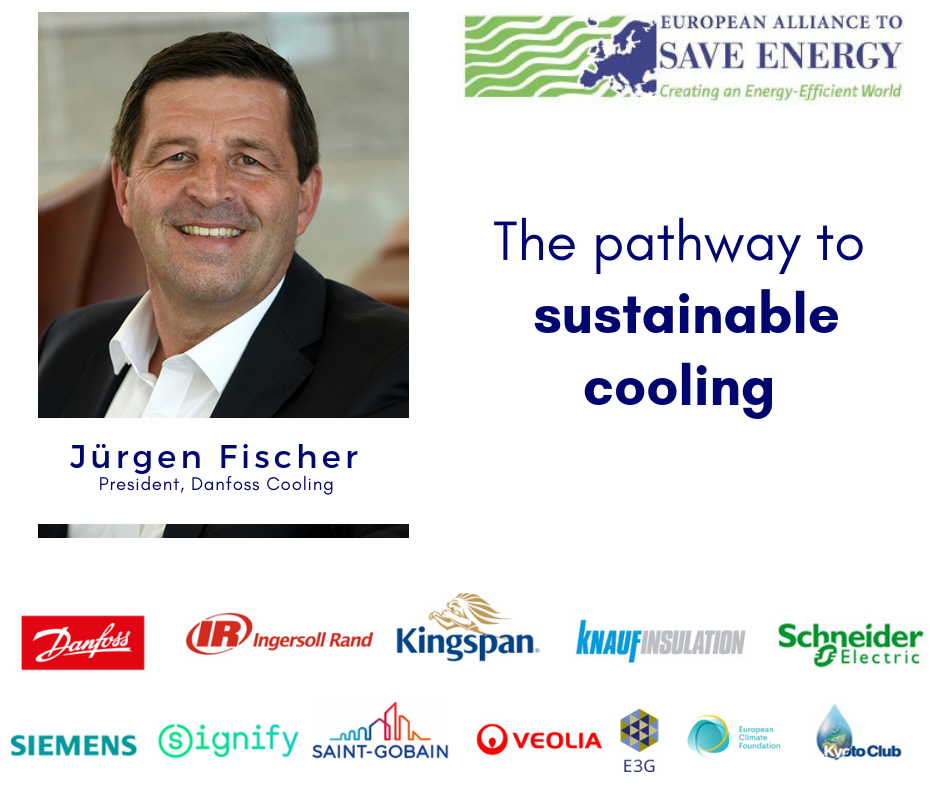
Jürgen Fischer, President, Danfoss Cooling

Jürgen has broad leadership experience from global industrial companies within IT, telecommunication, and machine-building. He is passionate about the digital transformation in the cooling sector and constantly challenges innovation to leverage e.g. the potential of energy storage across Danfoss. In 2008, Jürgen joined Danfoss as Vice President for Industrial Automation, and since 2015, Jürgen Fischer has been President of Danfoss Cooling.

Jürgen holds a master’s degree in Economics from the University of Augsburg. In addition, he holds several degrees from executive education programs at INSEAD and IMD.

As the global temperature rises, sustainable space cooling solutions are more important than ever. The IEA Future of Cooling report estimates that the energy demand for air conditioners is expected to triple by 2050; leading to a space cooling energy growth of 30% in Europe by 2050. The increase in demand for space cooling can put severe pressure on the power grid and challenges to achieve the Paris agreement goals if nothing is done, warns the IEA.

Luckily, the report also estimates a saving potential for today’s space cooling by 50%. If we use the best available technology, we will secure cooling that is both sustainable and provides comfort for millions of citizens.

Success hangs on how quickly we can deploy this technology at scale. Five key areas can make a difference and help the EU Commission delivering actions of the “A Clean Planet for All” strategy:

  1. Roll-out appropriate energy standards and labelling schemes

Minimum Energy Performance Standards (MEPS) are the easiest and most efficient way to ensure that only energy efficient cooling devices are placed on the market. The roll-out of labelling schemes across the globe ensures that we use cost-effective technologies. This reduces the total cost of ownership for the devices and benefits of the end-users. However, the use of MEPS needs to be combined with strong market surveillance and enforcement to realize its full potential and ensure all stakeholders are complying with the same rules.

  1. Implement a system approach and secure maintenance of energy efficiency over time

Cooling systems need constant maintenance to ensure that they deliver the promised energy savings over time. According to the European Commission, 75% to 90% of the EU building stock is inefficient. But only 1% of it is renovated each year. There are two priorities for policy makers: one is to accelerate the retrofit of existing buildings and their cooling systems and the other is to improve their maintenance routines over time. The Energy Performance of Buildings Directive (EPBD) goes into the right direction and addresses these two priorities. The stronger focus on the renovation of the existing buildings, e.g. via the long-term renovation strategies and on the optimization of technical buildings systems, such as cooling, heating and ventilation systems are identified. The next critical step is to ensure a good implementation of the EPBD at national level.

  1. Combining heating and cooling with renewable energy

With today’s technology we can use supermarkets as giant batteries which allows us to store fluctuating renewable energy sources and balance the energy system. Is heating the future of sustainable cooling? Using excess heat coming from cooling applications, i.e. in supermarkets, we can re-use it to heat our water or warm up our buildings — saving energy and money and reducing the pressure on our energy systems. We need to break down silos to unleash the benefits derived from connectivity across sectors.

  1. Leverage the potential of district cooling

In a district cooling system chilled water is being used to cool down buildings and therefore save energy. Copenhagen is a great example, where a district cooling system was established to service hospitals, office buildings, and schools. The result was win-win, with CO2 emissions reduced by about 65% and consumer savings of 80% on energy costs. Looking at the benefits, it is essential to unlock its full potential with new heating and cooling renewable targets. The new national energy and climate plans must be adopted according to the new Governance Regulation on the Energy Union.

  1. Build a framework for the development of new business models

To unlock the full potential of energy efficiency and meet the future energy demand, we need to enable new business models and demand-side management. Energy storage is the key to unlocking flexibility in our energy systems, which can ultimately turn energy consumers into prosumers. We need policies to encourage the re-use of heat that would otherwise be released into the air.

Together we can deliver “A Clean Planet for all”

Looking at today’s best available technology, the next step needs to be the implementation of ambitious legislation and regulations to increase energy efficiency across sectors. The industry is ready and, together with policymakers and governments, we can unlock the full potential of energy efficiency and open the pathway for a lower energy demand. Let’s join hands across sectors and work towards a cooled and environmental-friendly future together.
Follow us


Privacy Policy

© All right reserved

At COP24, President underlines that Energy Efficiency comes first, but needs to work in synergy

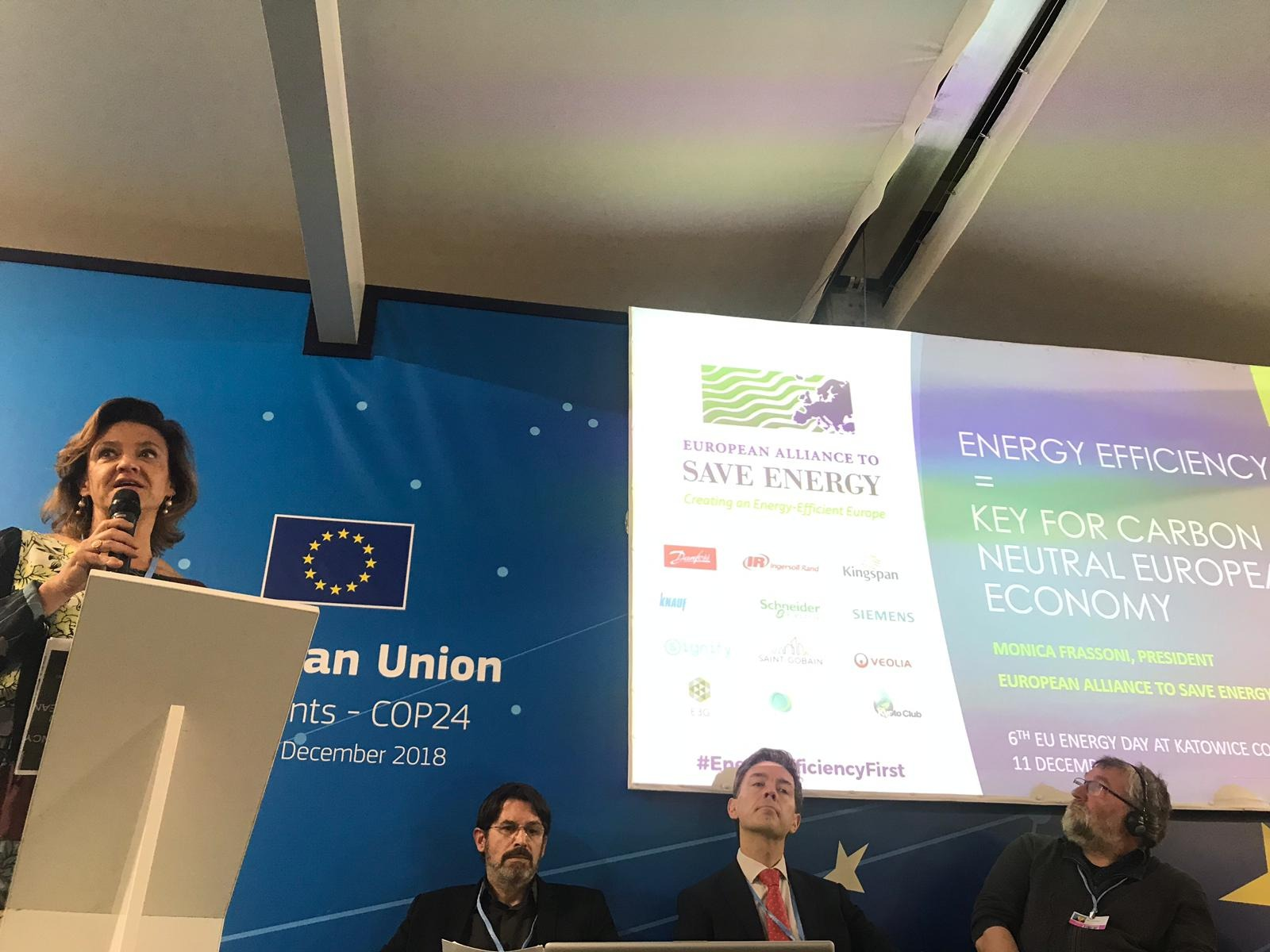
EU-ASE President Monica Frassoni took part to the EU Energy Day, a long-day session organised by the European Commission on the framework of COP24 in Katowice, where she participated in the panel “Renewables, decentralisation and democracy: transforming energy systems”.

One of the very few energy efficiency voices present in the panel, during her intervention Frassoni underlined that Energy Efficiency First must indeed be central to all future planning, but that it needs to work in synergy with other actors of the energy transition, with especial emphasis on renewables. Citizens, which are at the heart of the change, must be included as active participants in the climate and energy discussions, she said.

After her intervention at the panel, Monica was interviewed by EU-ASE Member Danfoss on the back seat of a Tesla car. On this innovative, different setting, she addressed the untapped potential of energy efficiency and said it is “the golden bullet in our hands”.

Follow us


Privacy Policy

© All right reserved

Businesses, society and Public Administration agree on the opportunities derived from an ambitious energy transition

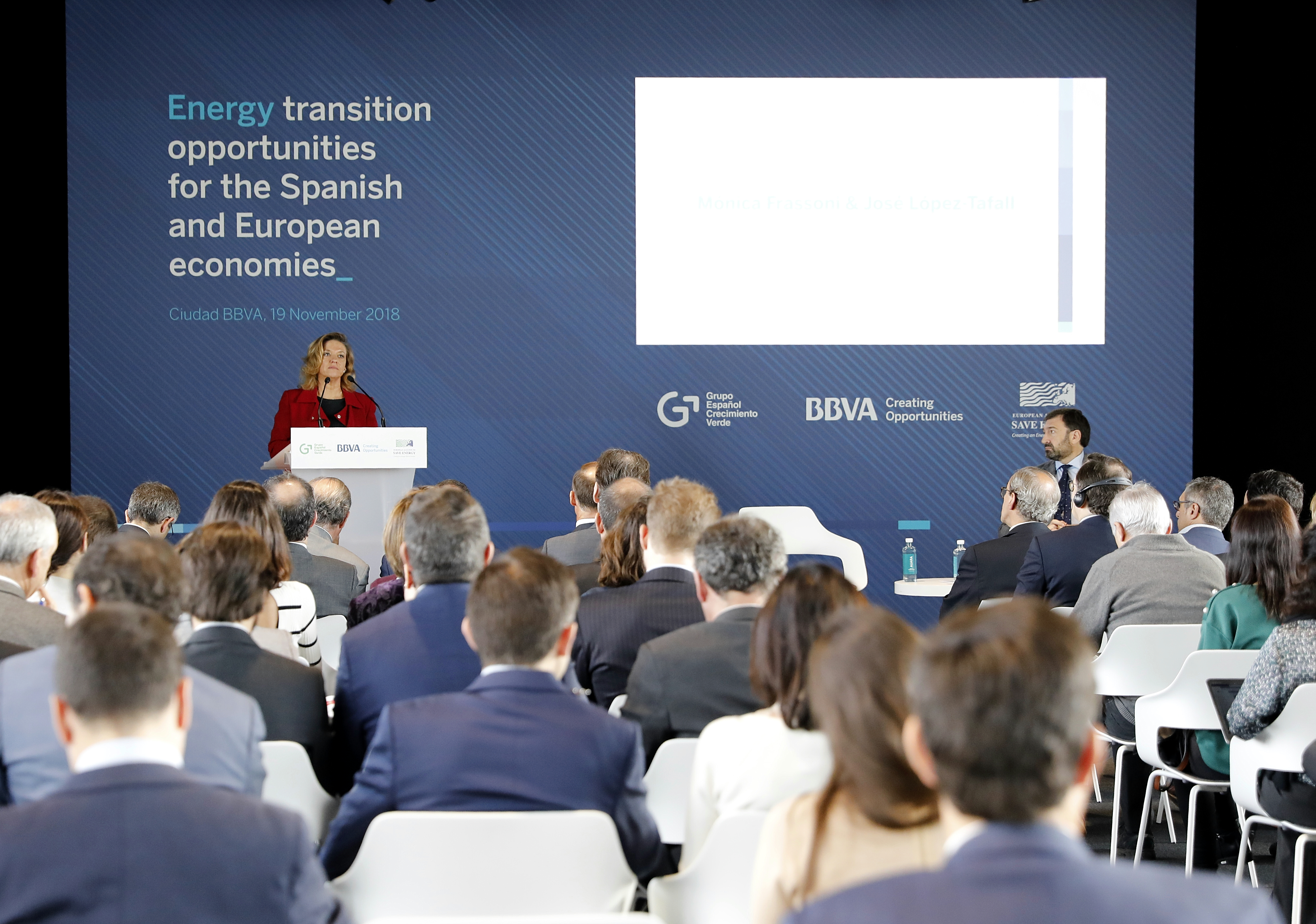
The joint debate organised by the Grupo Español para el Crecimiento Verde (GECV) and the European Alliance to Save Energy (EU-ASE) ratifies the business, NGOs, academia and Public Administration’s support to an ambitious and stable climate and energy legislative framework

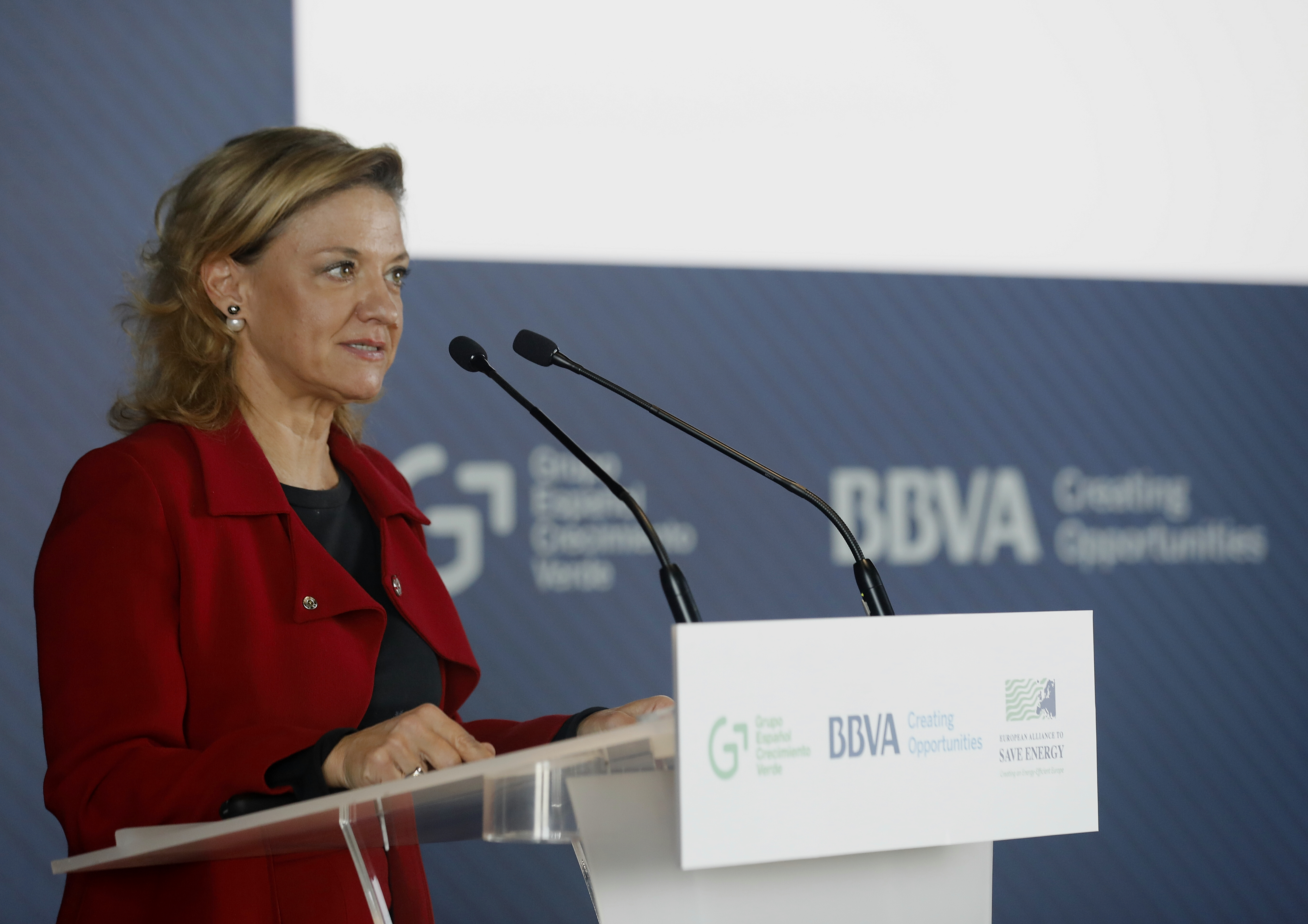
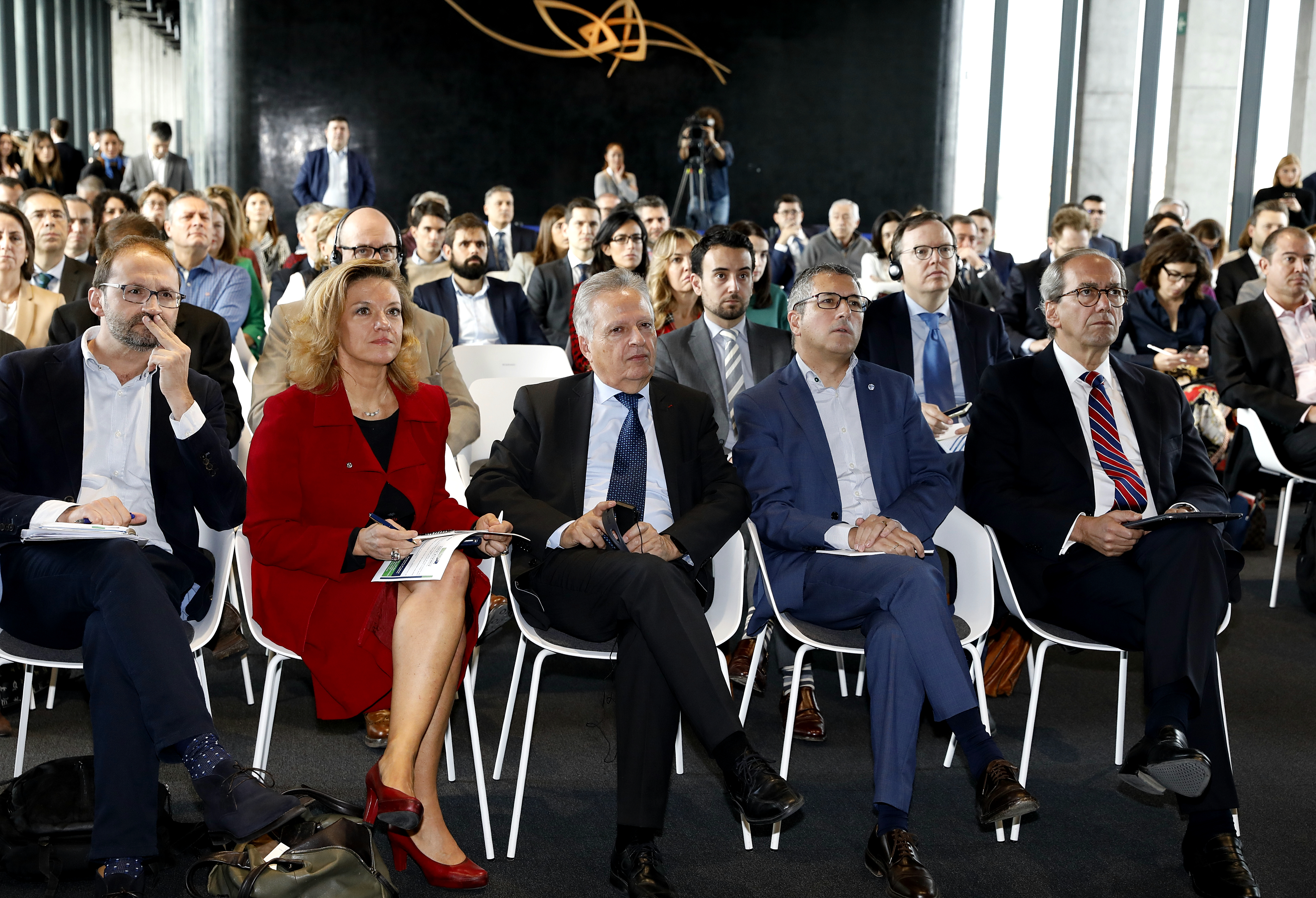
The debate, moderated by Mónica López, Head of the Meteorological Service of Spanish public TV TVE, started with a welcome address by Antoni Ballabriga, Global Director of Responsible Business at BBVA, and was later on introduced by EU-ASE President Monica Frassoni and José López-Tafall, GECV Secretary General. López-Tafall stated that “it is possible to decarbonise and grow at the same time, it is economically viable”, while Frassoni underlined that we should bet on decarbonising the economy and reminded the audience of the urgency of a clear, ambitious and just roadmap.

José Manuel González-Páramo, Head of Global Economics, Regulation and Public Affairs at BBVA, who also took part in the debate, reminded the attendants that, according to the European Commission, we still lack €180,000 in additional annual investment if we want to reach the energy and climate objectives set for 2030. He also highlighted BBVA’s commitment with climate change and the key role businesses play.

Hugo Morán, Spanish Secretary for Environment, highlighted the great work EU-ASE and GECV are doing by organising this type of initiatives and pointed out that “mitigation is not synonym to deindustrialistion and adaptation doesn’t mean resignation”. He also underlined the importance of the future Climate and Energy legislation, that will guarantee that Spain complies with the goals set by the European Union and the Paris Agreement. Morán argued that “the setting of a stable regulatory framework, with adequate incentives and that fosters the necessary investments taking into account the market reality, is key to achieve a successful transition“.

Director General for Energy at the European Commission, Dominique Ristori, started his intervention stating that the new regulatory framework for energy and climate proposed by the Spanish Government is an opportunity for all, both businesses and investors. Ristori said that it is necessary to show clear leadership at the national level to address the energy transition, that has become a priority. Such leadership, he told the audience, should be based on three pillars – a clear and predictable regulatory framework, business opportunity, and access to sustainable financing. He also underlined that organising this type of initiatives is both important and timely, as they seek to create positive synergies between national and European authorities and what he defined as new business.

The session concluded with a round-table debate between representatives from different business sectors, NGOs and Public Administration, with speakers from EU-ASE members Danfoss and Knauf Insulation, as well as from Iberdrola, WWF Spain, the Institute for the Diversification and Saving of Energy (IDAE), and the Spanish Office for Cliamte Change (OECC). Ernesto Ubieto, President of Southern Europe Region at Danfoss, underlined the important role governments have to play for placing energy efficiency at the centre of the implementation and transposition of the European clean energy legislation and, especially, with regards to the EED and EPBD. Óscar del Río, General Manager at Knauf Insulation Iberia, stated that “without the Public Administration we cannot advance in tackling the challenges we face. “Businesses are ready to play their part; public administration needs to lean on us more”, he said. Joan Herrera, Director of IDAE, claimed that “we cannot allow ourselves [Spain] to be rich in resources and poor in political drive and ambition. We need regulation”, while Valvanera Ulargui, Director of the OECC, stated that “once we are all aware of climate change and the energy transition, the moment has come to take action and generate actual facts and data”. Ulargui pointed out that this is the message they would take to the upcoming COP24, “with a message of ambition and, especially, urgency”, she said.

Both the Grupo Español para el Crecimiento Verde and the European Alliance to Save Energy (EU-ASE) consider the debate, celebrated in the prelude of the presentation of the Climate Change Law draft, was crucial to convey the message to the Spanish Government that a big part of the Spanish business sector clearly supports the energy transition and the implementation of a national and European regulatory framework that is strong and leverages the necessary investments for achieving the change of economic model and of paradigm.


More information:

lauraj.bole@euase.eu

+34 693616088

Follow us


Privacy Policy

© All right reserved

The Italian building stock – Strategic sector for Energy Efficiency in the country

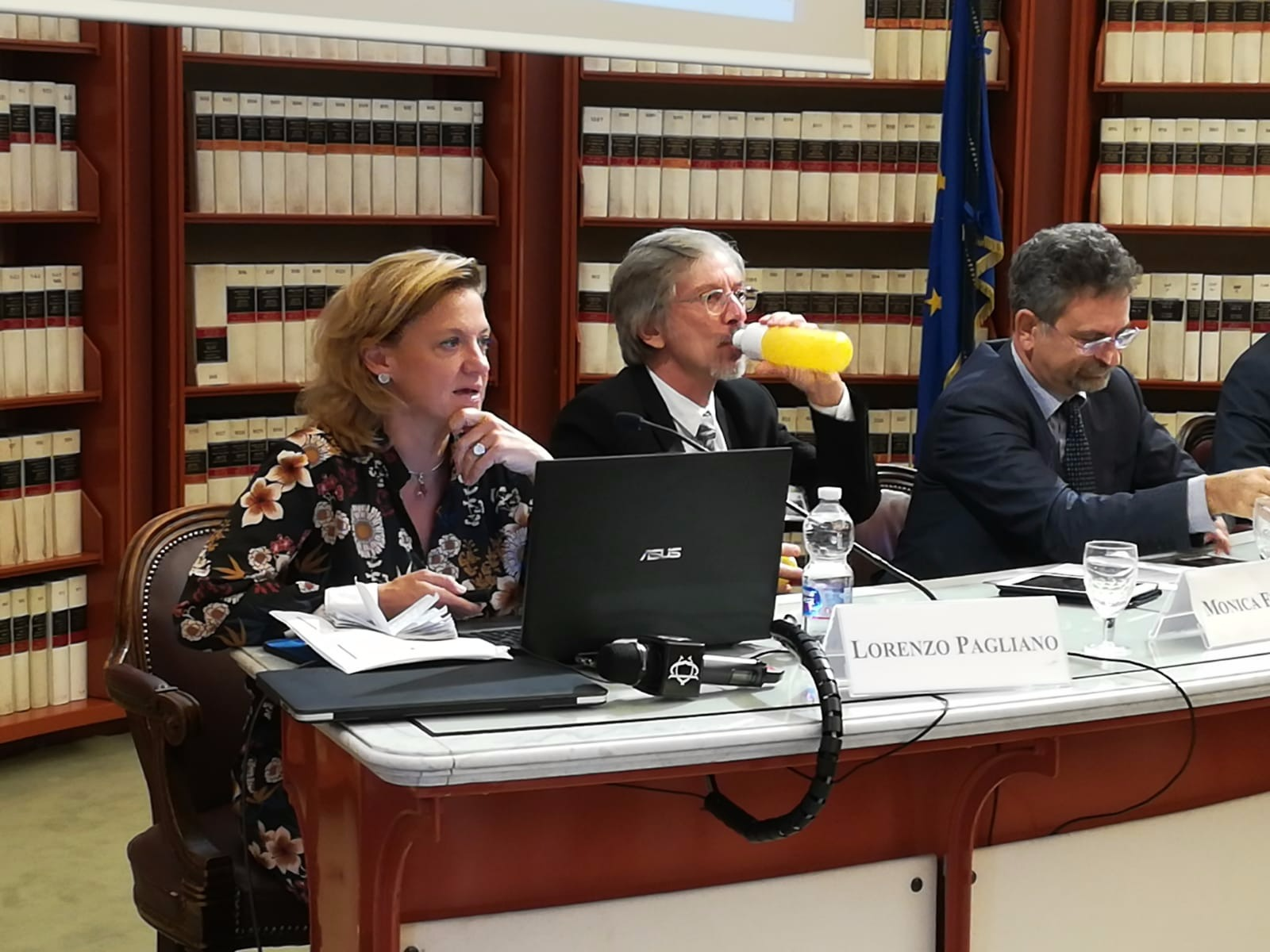
Last 19th October, EU-ASE’s President Monica Frassoni took part in Kyoto Club’s event in Rome “The Italian real estate: a strategic infrastructure at the service of the country’s energy system”, where she participated on a panel together with Francesco Ferrante (Kyoto Club’s Vice-President), Lorenzo Pagliano (Professor at Politecnico de Milano), Alberto Mario Ermelli Cupelli (Manager of International Relations at Knauf Insulation Italia), Alessandro Carettoni (DG for Climate and Energy at Italian Environment Ministry), and Paolo Curati (Managing Director at Knauf Insulation Italia).

Frassoni outlined how the new EU energy efficiency framework can promote the energy retrofit of buildings, and called on the Italian Government for increased earmarking and climate mainstreaming in next MFF post-2020 to incentivise private investments in the building sector.

“Like it or not energy efficiency is key to decarbonise the European Union”


Monica Frassoni, EU-ASE President

During her intervention, she also addressed EU-ASE’s main points, pointing out that energy efficiency is key to decarbonising the EU, that improvements made in energy efficiency mean more energy security and less dependence on gas imports, ant that the EED targets are not a goal, but a starting point for national transposition.

Follow us


Privacy Policy

© All right reserved

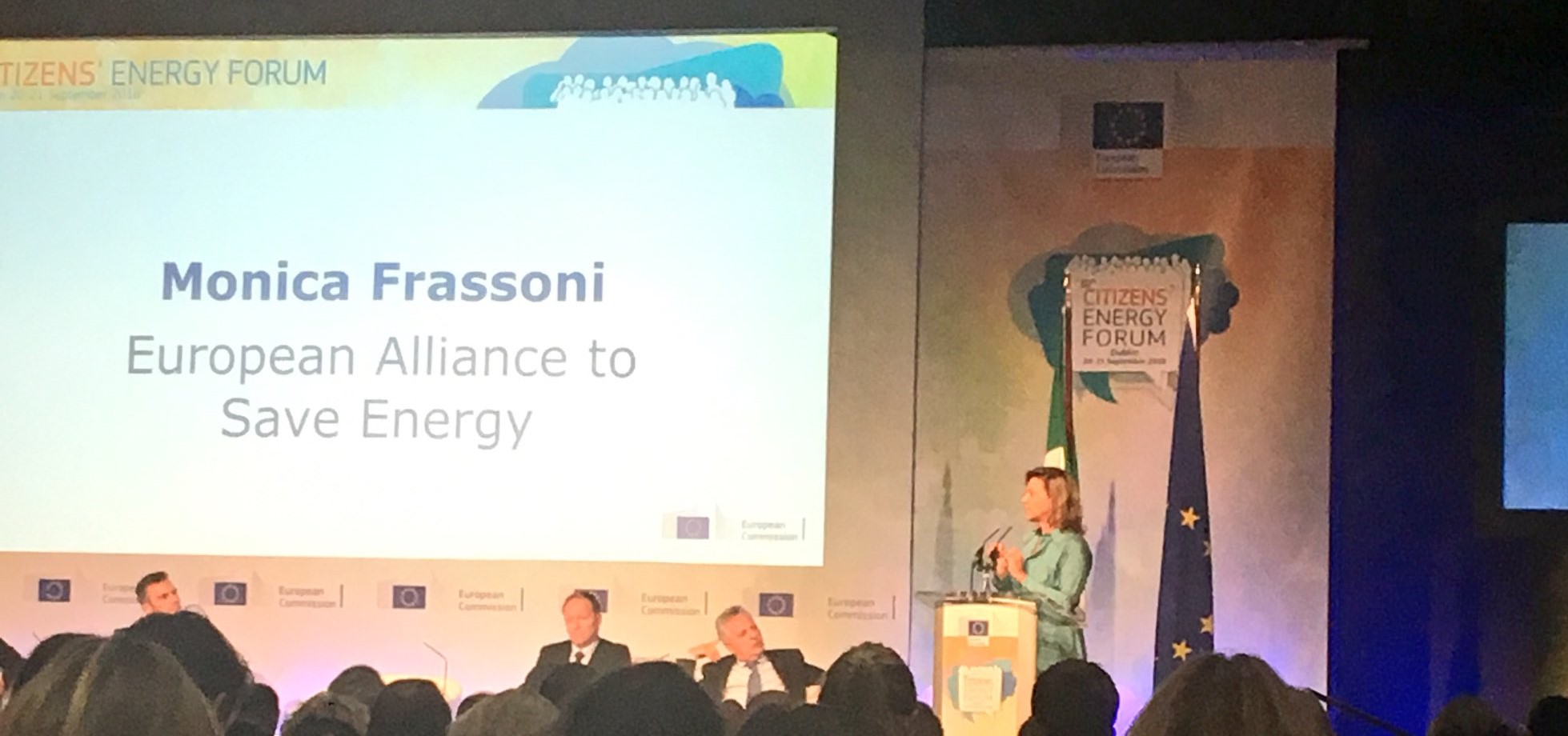
Energy efficiency at the center of 10th Citizens’ Energy Forum in Dublin

The EU-ASE President Monica Frassoni attended the 10th Citizens’ Energy Forum, which was launched by the European Commission in 2008 as a dedicated platform to implement and enforce consumer rights on the energy market across the European Union.

Organised annually, the Forum has served to structure the debate and channel consumers’, regulators’ and industry’s views on the energy market and its future, directly feeding into the work of the Commission in the energy and consumer policy areas. This year’s forum aimed at placing the discussion on the role of consumers on the energy market in the context of the measures proposed by the Clean Energy for all Europeans package and the recently adopted New Deal for Consumers package.

“Citizens need to be involved to ensure a transparent discussion on the choices that are being made when it comes to decisions between investing in new infrastructure or more retrofitting.”


Monica Frassoni, EU-ASE President

The opening session started with the speech of Dominique Ristori (DG ENER) which was followed by Denis Naughten (Minister for Communications, Climate Action and Environment), Miguel Arias Cañete (European  Union’s Commissioner for Climate Action & Energy) and  Sean Kelly (MEP), who agreed that the on-going negotiations and the implementation of the Clean Energy Package should keep focus on placing the empowered consumers at the center of the energy transition.


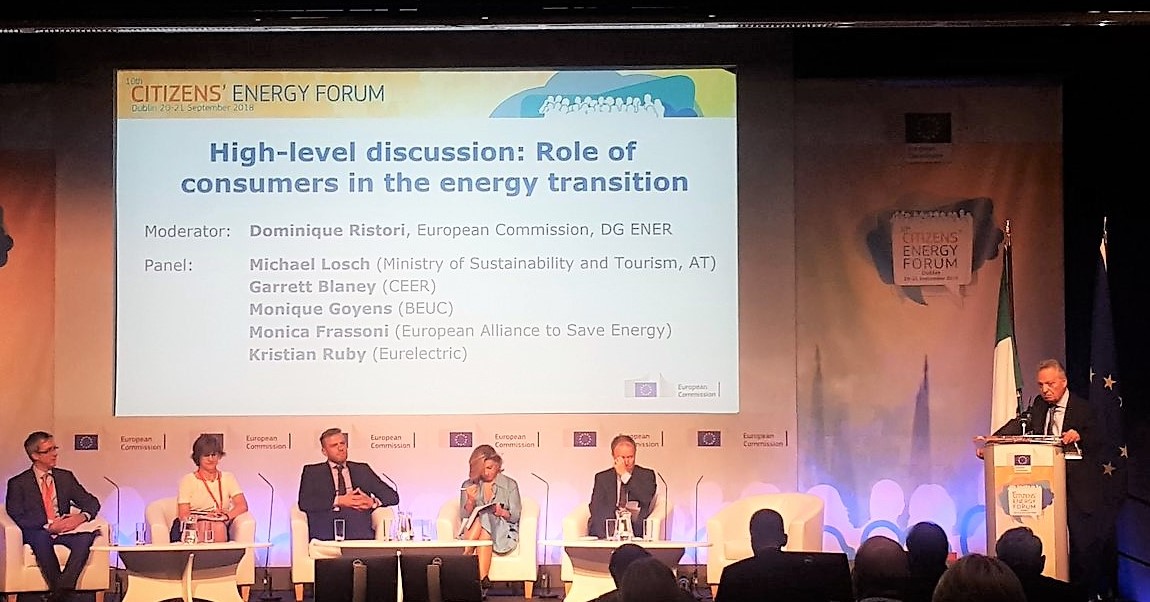
EU-ASE President Monica Frassoni was invited to take part in the High-level discussion on “The Role of consumers in the energy transition”, together with Michael Losch (Ministry of Sustainability and Tourism, Austria), Garrett Blaney (CEER), Monique Goyens (BEUC) and Kristian Ruby (Eurelectric), and moderated by Dominique Ristori (DG ENER).

During her intervention, Ms Frassoni stressed the importance of the inclusion of the energy efficiency first principle in the Regulation of the Governance of the Energy Union as a key novel element that will help ensure that the consumers are able to play an active role in the energy transition. “Energy efficiency first is not a PR concept, but a principle that should guide the implementation and investment decisions” she emphasized.

“Citizens need to be involved to ensure a transparent discussion on the choices that are being made when it comes to decisions between investing in new infrastructure or more retrofitting.”


Monica Frassoni, EU-ASE President

Regarding the Clean Energy Package for All Europeans, she stressed that some progress has been made with the adoption of the recast Energy Efficiency Directive, but underlined the need to increase the energy efficiency target by 2023, as a possibility given by the upwards revision clause.

Citizens need to be involved to ensure a transparent discussion on the choices that are being made when it comes to decisions between investing in new infrastructure or more retrofitting” she stressed, and pointed out the difference of these choices in terms of their financial impact but also in terms of their impact on citizens health and the quality of life. Ms Frassoni informed the audience about the European Commission’s Impact Assessment, which stated that every percentage point increase in the 2030 energy efficiency target would mean lifting millions of people out of energy poverty and called on the Commission to show more ambition in the future. In her intervention she also gave an example of very low interest for green mortgages and stressed the need to create the sense of urgency among consumers that more ambitious legislations is needed and that that it is good for the consumers, their quality of life and for the environment.

“Energy efficiency first is not a PR concept, but a principle that should guide the implementation and investment decisions.”


Monica Frassoni, EU-ASE President

EU-ASE President concluded by stressing that the European Alliance to Save Energy is calling for energy efficiency to be perceived as an integral part of the future energy system with an ultimate aim to benefit European citizens.

Follow us


Privacy Policy

© All right reserved