
Energy Efficiency and renewables are two sides of the same lucky coin
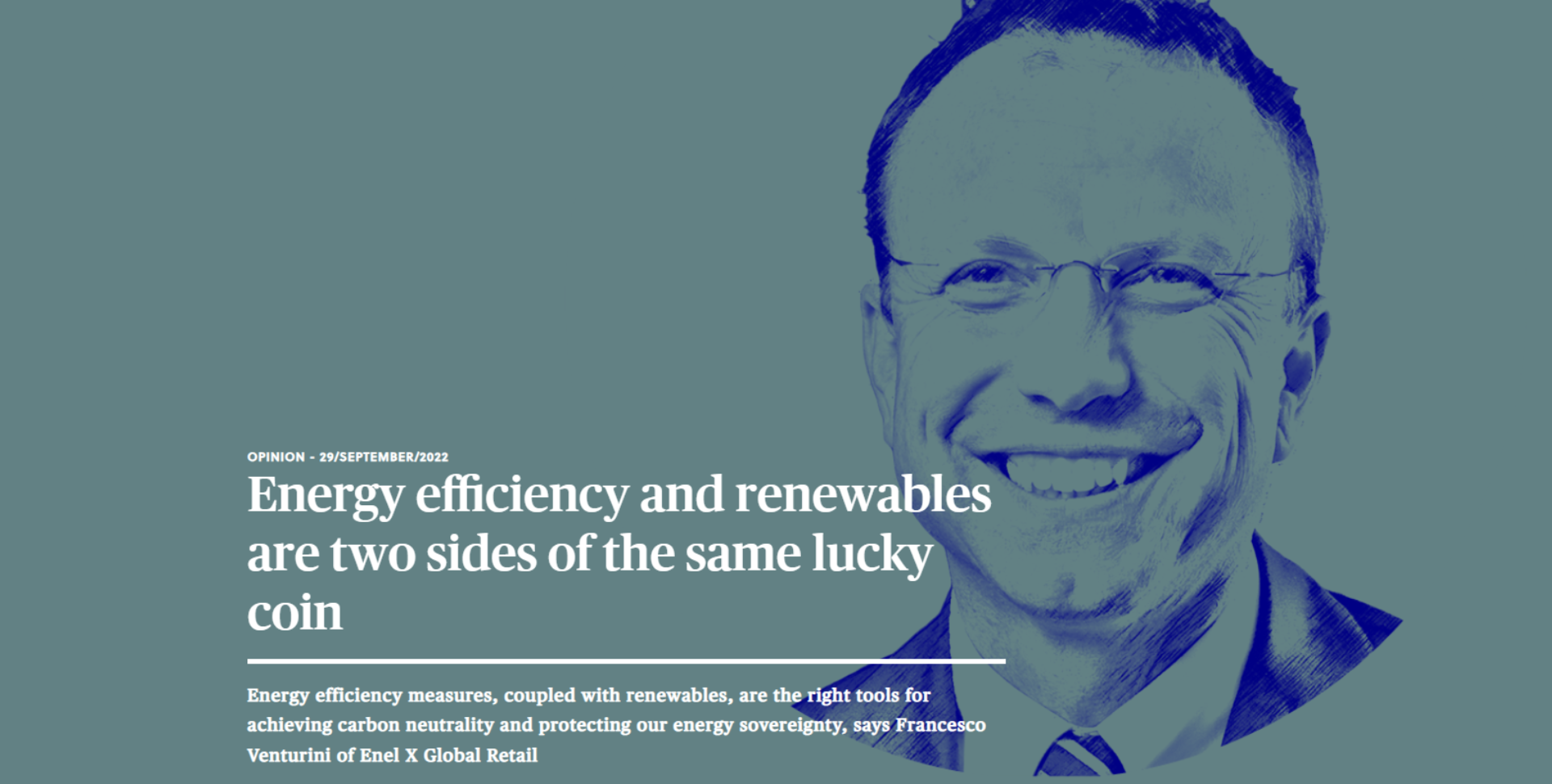
Energy efficiency measures, coupled with renewables, are the right tools for achieving carbon neutrality and protecting our energy sovereignty, says Francesco Venturini of Enel X Global Retail ahead of the first edition of the European Energy Efficiency Day.


Citizens, businesses and local governments must join forces to equip themselves with facilities for the production and self-consumption of energy from renewable sources by promoting virtuous behaviours.

Today, market transformation is happening in a very disruptive way. The historical events of the past six months demand an impressive acceleration of the trajectory outlined by the European Green Deal in 2019. Looking back at the past eight years, global investments in clean energies have blossomed to $371 billion, an increase of approximately $60 billion compared to 2014 levels.

Is there enough to go around? The answer for most of us is simple: no.

The Ukraine conflict and its consequent war on prices are proving that our society does not have access to abundant, reliable, cheap and clean energy—placing its economic and social progress at stake. 

But we still have a lucky coin in our pocket: energy efficiency measures can substantially reduce Europe’s carbon footprint if combined with consistent investments in renewable energy.

Read the full article here

More information on European Energy Efficiency Day here & Register here.
Follow us


Privacy Policy

© All right reserved

In a fast-changing political and economic environment, 2025 was a year of continued efforts to strengthen security, stability, and competitiveness for European businesses.

Throughout the year, our work demonstrated that energy efficiency is not only essential to achieving climate goals, but also a key driver of innovation, energy independence and sustainable long-term growth across Europe.

Strong engagement with policymakers, combined with the successful organisation of the 4th European Energy Efficiency Day, highlighted the importance of collaboration and dialogue in advancing shared objectives. Partnerships across sectors and institutions remained central to delivering impact and shaping effective energy policies.

Looking ahead to 2026, we will intensify our efforts to secure the regulatory certainty that can accelerate the energy transition, while providing businesses with the investment confidence they need and strengthening Europe’s  competitiveness.

Read the full Activity Report here

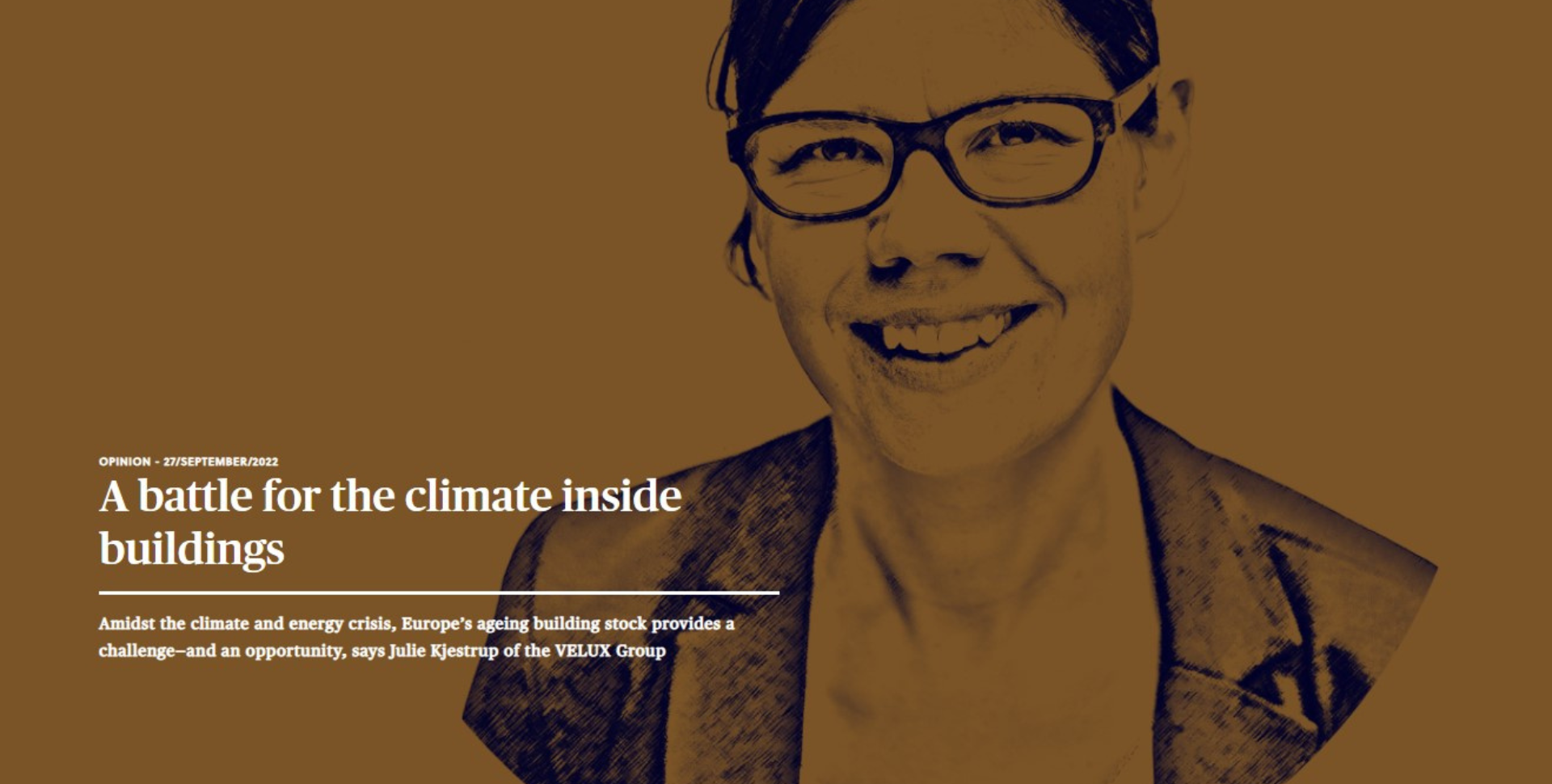
A battle for the climate inside buildings

Amidst the climate and energy crisis, Europe’s ageing building stock provides a challenge—and an opportunity, says Julie Kjestrup of the VELUX Group ahead of the first edition of the European Energy Efficiency Day.

There are more benefits to energy efficiency measures than simply saving money. Climate change is happening rapidly and so are the consequences of not fighting it adequately, intentionally and consistently. Despite scientists showing us the marked impact of climate change as well as what we need to do to mitigate it, we are not currently on the right path towards meeting the Paris Agreement and the EU’s 2050 climate neutrality goal. Add to that the recent hike in energy prices and fast action is essential. We can still get on track if we all play our part by taking responsibility and acting now. 


Read the full article here

More information on Energy Efficiency Day here & Register here.

Follow us


Privacy Policy

© All right reserved

In a fast-changing political and economic environment, 2025 was a year of continued efforts to strengthen security, stability, and competitiveness for European businesses.

Throughout the year, our work demonstrated that energy efficiency is not only essential to achieving climate goals, but also a key driver of innovation, energy independence and sustainable long-term growth across Europe.

Strong engagement with policymakers, combined with the successful organisation of the 4th European Energy Efficiency Day, highlighted the importance of collaboration and dialogue in advancing shared objectives. Partnerships across sectors and institutions remained central to delivering impact and shaping effective energy policies.

Looking ahead to 2026, we will intensify our efforts to secure the regulatory certainty that can accelerate the energy transition, while providing businesses with the investment confidence they need and strengthening Europe’s  competitiveness.

Read the full Activity Report here

Decarbonisation through digitalisation: The key role of smart city districts in boosting energy efficiency

Smart buildings are energy-saving, sustainable buildings. Clustered into smart city districts, they play a crucial role in climate protection. The adaptive, open-source technology to make this possible is already available, says Matthias Rebellius of Siemens Smart Infrastructure on Foresight Climate & Energy ahead of the first edition of the European Energy Efficiency Day. 

Decarbonisation comes with a simple truth: kilowatt-hours that are not consumed do not have to be produced. They do not have to be stored or distributed. And when we are saving energy to avoid carbon emissions, this becomes all the more critical.

Efficiency is key, especially in the building sector. Buildings account for 40% of global energy consumption. But the average building still wastes up to 50% of the energy it consumes. Equipping or retrofitting a building with digitalised, networked and intelligent systems can reduce its ecological footprint by up to 80%.

Efficiency is more than modern insulation and state-of-the-art heating systems. We need smart building technologies and efficient building operations if we are going to move the needle on decarbonisation, especially in brownfield applications. A huge amount of leverage is being wasted. Buildings should—and can—contribute much more to the global decarbonisation effort.

Yet we must not focus just on buildings. We have to take into account synergies and efficiency gains on the community and city levels.


Read the full article here

More information on Energy Efficiency Day here & Register here.

Follow us


Privacy Policy

© All right reserved

In a fast-changing political and economic environment, 2025 was a year of continued efforts to strengthen security, stability, and competitiveness for European businesses.

Throughout the year, our work demonstrated that energy efficiency is not only essential to achieving climate goals, but also a key driver of innovation, energy independence and sustainable long-term growth across Europe.

Strong engagement with policymakers, combined with the successful organisation of the 4th European Energy Efficiency Day, highlighted the importance of collaboration and dialogue in advancing shared objectives. Partnerships across sectors and institutions remained central to delivering impact and shaping effective energy policies.

Looking ahead to 2026, we will intensify our efforts to secure the regulatory certainty that can accelerate the energy transition, while providing businesses with the investment confidence they need and strengthening Europe’s  competitiveness.

Read the full Activity Report here