State of the Union – clima e energia, ora accelerare

Su clima e energia il discorso di Juncker è condito di buone intenzioni: molte le partite da chiudere e una novità di rilievo.

Nell’indicare le priorità UE in materia di clima ed energia il presidente della Commissione europea Jean-Claude Juncker nel suo State of the Union si è posto nel segno della continuità con le politiche intraprese finora dall’Esecutivo UE.

Spazio al completamento delle azioni già intraprese. Del resto, ha affermato Juncker, “la Commissione ha già presentato l’80% delle proposte promesse all’inizio del mandato”.

Clima: UE renderà nuovamente grande il nostro pianeta

“Voglio che l’Europa si ponga alla guida della lotta contro i cambiamenti climatici. L’anno scorso abbiamo fissato le regole del gioco a livello globale con l’accordo di Parigi, ratificato proprio qui, in quest’aula. Di fronte al crollo delle ambizioni degli Stati Uniti, l’Europa farà in modo di rendere nuovamente grande il nostro pianeta. È patrimonio comune di tutta l’umanità”, ha detto il numero uno della Commissione.


Trasporti: presto proposta per ridurre le emissioni

Sul fronte del clima, Juncker ha anticipato una novità: “La Commissione presenterà una proposta di riduzione delle emissioni nel settore dei trasporti”.

Fra le iniziative da avviare o completare entro la fine del 2018, figurano:

  • da un lato, il pacchetto Mobilità e cambiamenti climatici, contenente proposte legislative in materia di veicoli puliti, norme comuni per il trasporto combinato delle merci, standard per le emissioni di CO2 delle autovetture e dei furgoni, standard per l’efficienza dei carburanti e le emissioni di CO2 degli autocarri e degli autobus e un’iniziativa intesa ad accelerare la creazione delle infrastrutture per i carburanti alternativi;
  • dall’altro, l’iniziativa l’Europa in movimento, per rendere il traffico più sicuro, incoraggiare l’adozione di sistemi di pedaggio più equi, ridurre le emissioni di CO2, l’inquinamento atmosferico e la congestione del traffico, ridurre gli oneri burocratici per le imprese, combattere il fenomeno del lavoro nero e garantire ai lavoratori condizioni e tempi di riposo adeguati.

Mobilità a basse emissioni

Fra le proposte già avanzate dalla Commissione in tale contesto, la comunicazione risalente a luglio dello scorso anno per una mobilità a basse emissioni, che intende tradurre in pratica l’obiettivo di ridurre le emissioni di gas a effetto serraprovenienti dai trasporti di almeno il 60% rispetto al 1990 entro il 2050.

In particolare, la strategia fa riferimento a tre ambiti di intervento:

  • miglioramento dell’efficienza del sistema di trasporto;
  • energia alternative a basse emissioni;
  • veicoli a basse o zero emissioni.

Cuore pulsante dell’iniziativa, la mobilità elettrica: obiettivo finale di Palazzo Berlaymont è rendere possibile l’attraversamento dell’intero continente con un veicolo elettrico. Ciò richiede la diffusione capillare sull’intero territorio europeo delle necessarie infrastrutture di ricarica e manutenzione.

L’UE sostiene la realizzazione di quest’infrastruttura sia finanziariamente, sia attraverso le piattaforme dei portatori d’interesse, come il forum per i trasporti sostenibili. Sono in corso progetti – quasi un centinaio – che studiano l’interesse economico e testano la fattibilità con prove in condizioni reali: collettivamente comportano oltre 1 miliardo di euro di investimenti pubblici e privati e quasi 600 milioni di euro di sostegno finanziario dell’UE.

Malgrado gli sforzi di Bruxelles, l’Europa viaggia ancora a due velocità quando si tratta di auto elettriche. Basti confrontare i casi italiano e norvegese: mentre nel Belpaese nel 2016 le immatricolazioni di auto elettriche in Italia non hanno superato lo 0,1% del totale, in Norvegia i veicoli elettrici nel 2016 hanno rappresentato il 40,2% delle nuove immatricolazioni, e dal 2025 le uniche auto che potranno essere immatricolate saranno senza motore endotermico.

L’Europa in movimento

Alla comunicazione “Mobilità a basse emissioni” si aggiunge la più recente iniziativa “L’Europa in movimento”, presentata a fine maggio di quest’anno per rendere il traffico più sicuro, incoraggiare l’adozione di sistemi di pedaggio più equi, ridurre le emissioni di CO2, l’inquinamento atmosferico e la congestione del traffico, ridurre gli oneri burocratici per le imprese, combattere il fenomeno del lavoro nero e garantire ai lavoratori condizioni e tempi di riposo adeguati.

Si tratta di una strategia che, attraverso una legislazione mirata e misure di sostegno comprendenti investimenti nelle infrastrutture, nella ricerca e nell’innovazione, intende giungere entro il 2025 ad una mobilità intelligente, socialmente equa e competitiva.

La strategia presentata da Palazzo Berlaymont consiste in una comunicazione che delinea un piano di lungo termine per la mobilità sostenibile. A questa si aggiungono una serie di proposte legislative volte a migliorare il funzionamento del trasporto su strada, le condizioni di lavoro e sociali dei lavoratori del settore, e alcuni documenti in cui vengono presentate una serie di politiche Ue destinate ad accelerare il passaggio a un sistema di mobilità sostenibile, digitale e integrato.

Questa prima serie di proposte sarà integrata entro maggio 2018 da altre proposte, fra cui quelle relative alle norme sulle emissioni successive al 2020 per autovetture e furgoni, oltre alle prime norme riguardanti le emissioni dei veicoli pesanti, che fanno seguito alla proposta concernente il monitoraggio e la trasmissione di informazioni in tema di emissioni di CO2 e consumo di carburante dei veicoli pesanti.

Unione dell’energia: verso il completamento

“Mentre guardiamo al futuro, non possiamo perdere la rotta stabilita”, ha dichiarato Juncker in plenaria. E nell’elencare le politiche prioritarie il presidente dell’Esecutivo ha messo al primo posto proprio il completamento dell’Unione dell’energia.

Anche in questo caso la prospettiva temporale è la fine del 2018. Entro questa data la Commissione intende accelerare l’approvazione del pacchetto Energia pulita per tutti gli europei e dare seguito all’aspetto solidale dell’Energy Union. Ma, soprattutto nel primo caso, la volontà della Commissione dovrà vedersela con la resistenza degli Stati membri.

Energia pulita per tutti gli europei: un dossier controverso

A fine novembre 2016 il commissario Ue per il Clima e l’energia Miguel Arias Canete ha presentato un pacchetto da oltre mille pagine, che si pone tre obiettivi principali: privilegiare l’efficienza energetica, conquistare la leadership a livello mondiale nelle energie rinnovabili e garantire condizioni eque ai consumatori.

Maxi-pacchetto apprezzato nelle intenzioni ma criticato da più parti nell’approccio.

Gli ambientalisti, ad esempio, hanno tacciato la Commissione di mancanza di coraggio: all’indomani della presentazione il vicepresidente di LegambienteEdoardo Zanchini ha sostenuto che le proposte avanzate “non consentono all’Europa di accelerare la transizione verso un sistema energetico libero da fossili entro il 2050”.

Anche la European Alliance to Save Energy (EU-ASE), associazione europea multisettoriale che riunisce alcune rilevanti imprese multinazionali negli Stati membri, pur apprezzando la proposta l’aveva definita non “all’altezza di liberare in pieno il potenziale dell’efficienza energetica e dei relativi vantaggi per i consumatori” .

Il Parlamento europeo ha chiesto più ambizione, in particolare per quanto riguarda la revisione della direttiva efficienza energetica, contenuta nel pacchetto: la commissione Ambiente del PE ha di recente proposto di innalzare il target di efficienza energetica, portandolo dal 30% al 40% per il 2030 e di eliminare una serie di scappatoie.

Ma la resistenza maggiore ad innalzare i target di efficienza energetica non si trova nelle aule del Parlamento europeo, quanto ai tavoli del Consiglio, che già a giugno aveva raggiunto un accordo sull’approccio generale alla direttiva che già indeboliva la proposta iniziale della Commissione europea: i ministri avevano infatti proposto di rendere non vincolante l’obiettivo del 30% di efficienza energetica.

Unione dell’energia e solidarietà: no a Nord Stream 2

Nella lettera d’intenti inviata ai presidenti di Parlamento e Consiglio, Juncker si è soffermato quindi sul dare seguito, sempre entro la fine del prossimo anno, all’aspetto della solidarietà dell’Unione dell’energia, comprendente una proposta di norme comuni per i gasdotti che accedono al mercato interno europeo del gas.

Proposta che ha già ottenuto il via libera della plenaria, proprio nel corso della tornata che ha ospitato Juncker e il suo State of the Union, e che ora attende il via libera del Consiglio.

C’è poi un altro capitolo da chiudere entro la fine del 2018, quello dei progetti d’interesse comune necessari a collegare i mercati europei dell’energia.

I PIC sono quei progetti che hanno effetti positivi su almeno due Stati Membri, contribuendo all’integrazione del mercati dell’energia e ad una maggiore concorrenza nel perimetro dell’Unione. Tra questi, la Commissione europea sostiene il progetto di gasdotto East-Med, che collegherà il Mediterraneo orientale all’Europa.

Progetto che in un certo senso scalza un altro grande gasdotto, Nord Stream 2 – che permetterebbe il flusso di gas russo alla Germania passando attraverso il Mar Baltico – oggetto di numerose critiche. Intervenendo in plenaria, Canete ha ribadito la posizione della Commissione: “Il nostro orientamento – ha detto – è per la diversificazione delle fonti”, quindi la Commissione sosterrà “gasdotti utili per la sicurezza”, a differenza di Nord Stream 2 “che non sarà mai un progetto di interesse comune perché non fa aumentare la sicurezza delle forniture” e potrebbe creare “una posizione eventualmente dominante sul mercato”.

Canete ha quindi ricordato che la Commissione ha chiesto mandato al Consiglio per negoziare con la Federazione Russa: “Bruxelles vuole concordare alcuni principi fondamentali che intende applicare al funzionamento del gasdotto”.

Il futuro di Euratom

Fra le iniziative da avviare in prospettiva del 2025, ha sottolineato Juncker, una comunicazione sul futuro delle politiche dell’UE per l’energia e il clima, che contempli anche il futuro del trattato Euratom, la Comunità europea dell’energia atomica.

Frassoni (Verdi europei): da Juncker nessun piano d’azione concreto sul clima

“Oltre ai toni rassicuranti, il presidente Juncker non è riuscito a trasmettere l’idea di un piano d’azione concreto” per “affrontare disoccupazione e disuguaglianze”. Così Monica Frassoni, co-presidente del partito dei Verdi europei, ha commentato il discorso sullo Stato dell’Unione.

“L’approccio alla politica industriale è convenzionale e sembra ignorare il potenziale che deriva dal mettere insieme innovazione e lotta contro il cambiamento climatico, indipendenza dai fossili e crescita verde”. “Condividiamo l’ambizione del presidente Juncker di rendere l’Unione europea capace di mantenere le proprie promesse”, conclude Frassoni, “ma per raggiungere questo obiettivo sono necessarie alcune importanti modifiche nelle priorità e nell’approccio”.


Source: www.fasi.biz

Follow us


Privacy Policy

© All right reserved

In a fast-changing political and economic environment, 2025 was a year of continued efforts to strengthen security, stability, and competitiveness for European businesses.

Throughout the year, our work demonstrated that energy efficiency is not only essential to achieving climate goals, but also a key driver of innovation, energy independence and sustainable long-term growth across Europe.

Strong engagement with policymakers, combined with the successful organisation of the 4th European Energy Efficiency Day, highlighted the importance of collaboration and dialogue in advancing shared objectives. Partnerships across sectors and institutions remained central to delivering impact and shaping effective energy policies.

Looking ahead to 2026, we will intensify our efforts to secure the regulatory certainty that can accelerate the energy transition, while providing businesses with the investment confidence they need and strengthening Europe’s  competitiveness.

Read the full Activity Report here

Global energy players highlight common views on the energy efficiency potential in buildings and transport sector

 12 September 2017, Strasbourg, European Parliament: Today senior business representatives from Italian multinational energy supplier ENEL and the European Alliance to Save Energy (EU-ASE) – a cross-sectorial organization of companies providing energy efficient technologies and services – presented to Member of the European Parliament (MEPs) their “Common Views” on energy efficiency. They outlined that buildings and transport have the highest cost-effective energy savings potential in the EU, respectively 61% and 41%.

The exploitation of synergies between buildings, transport and the electricity system as well as the integration of efficient technologies and services through the smart grids and the development of smart cities represent business opportunities that Europe should not miss.

Simona Bonafé (S&D, Italy) welcomed this constructive holistic approach by key business players and said: “Energy efficiency is one of the greatest tools for boosting economic growth, creating qualified jobs and safeguarding a sustainable environment. In the building and transport sector, there is a huge potential for innovation and investments. We must move forward with ambitious legislation to give a clear message to all stakeholders”.

In his introductory speech, Harry Verhaar, Head of Global Public & Government Affairs, Philips Lighting and Chairman of EUASE Board of Directors, said: “Additional measures must be taken in the framework of the EED/EPBD revisions to speed up building renovation and increase the current EU annual renovation rate to at least 3%. Renovation strategies should be developed within each specific national energy context by planning in terms of districts and entire energy systems, rather than focusing only on individual buildings to reap the full potential of high-efficiency energy supply solutions and maximize the energy saving potential of the entire energy chain”.

On behalf of ENEL, Nicola Melchiotti, Head of European Public Affairs and Regulation, added: “To make the entire system more efficient we need smart homes, smart buildings and smart cities. Buildings and transport show a great potential for energy efficiency and electrification is the answer: the more we electrify, the less energy we use. In the transport sector electric engines are 5 times more efficient than traditional ones and they can help solve other pressing problems, like the air pollution in our cities. We need to capture this opportunity”.


Follow us


Privacy Policy

© All right reserved

In a fast-changing political and economic environment, 2025 was a year of continued efforts to strengthen security, stability, and competitiveness for European businesses.

Throughout the year, our work demonstrated that energy efficiency is not only essential to achieving climate goals, but also a key driver of innovation, energy independence and sustainable long-term growth across Europe.

Strong engagement with policymakers, combined with the successful organisation of the 4th European Energy Efficiency Day, highlighted the importance of collaboration and dialogue in advancing shared objectives. Partnerships across sectors and institutions remained central to delivering impact and shaping effective energy policies.

Looking ahead to 2026, we will intensify our efforts to secure the regulatory certainty that can accelerate the energy transition, while providing businesses with the investment confidence they need and strengthening Europe’s  competitiveness.

Read the full Activity Report here

La sfida dei cambiamenti climatici si vince anche con una politica ambiziosa e leggi chiare sull’efficienza energetica nell’edilizia e nei trasporti.

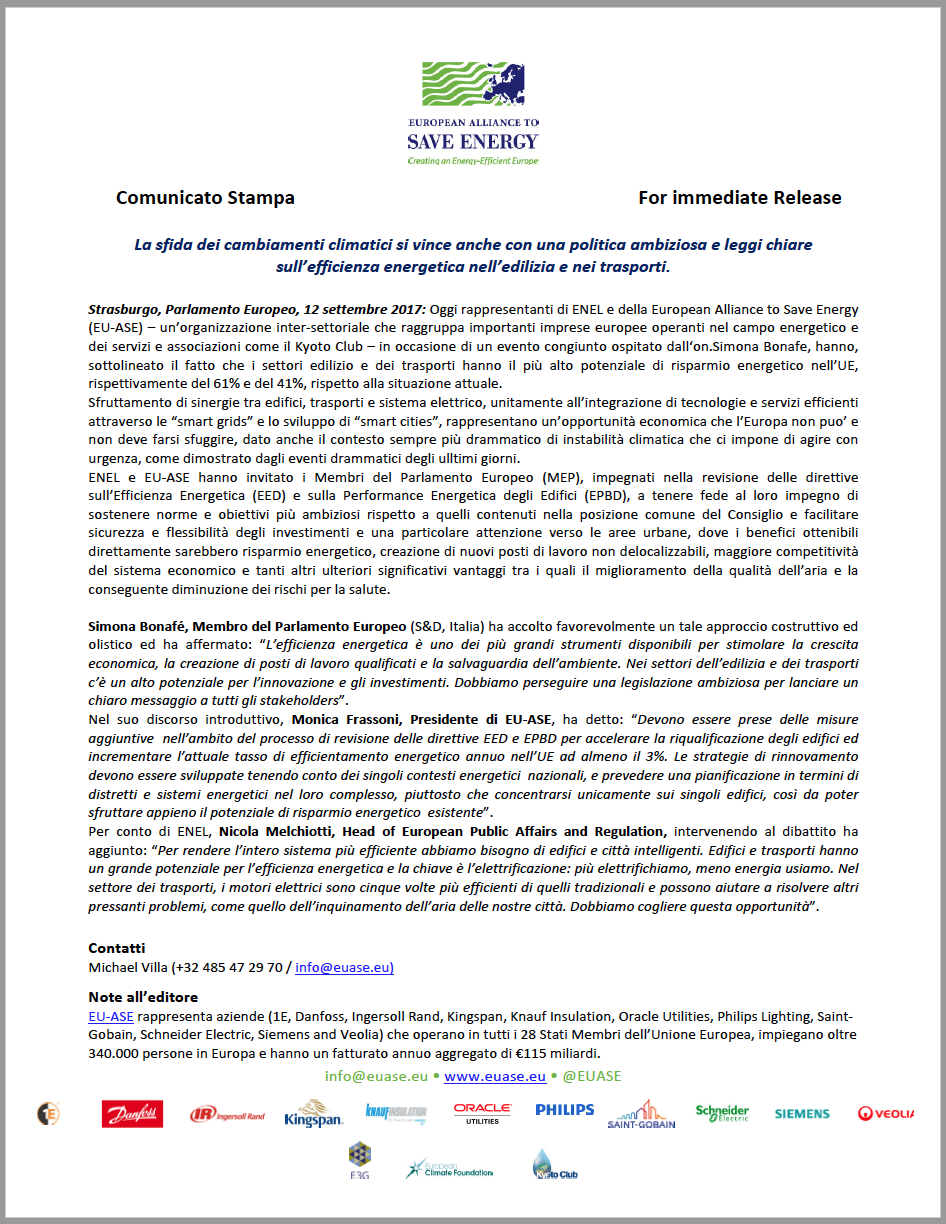
 Strasburgo, Parlamento Europeo, 12 settembre 2017: Oggi rappresentanti di ENEL e della European Alliance to Save Energy (EU-ASE) – un’organizzazione inter-settoriale che raggruppa importanti imprese europee operanti nel campo energetico e dei servizi e associazioni come il Kyoto Club – in occasione di un evento congiunto ospitato dall‘on.Simona Bonafe, hanno, sottolineato il fatto che i settori edilizio e dei trasporti hanno il più alto potenziale di risparmio energetico nell’UE, rispettivamente del 61% e del 41%, rispetto alla situazione attuale.

Sfruttamento di sinergie tra edifici, trasporti e sistema elettrico, unitamente all’integrazione di tecnologie e servizi efficienti attraverso le “smart grids” e lo sviluppo di “smart cities”, rappresentano un’opportunità economica che l’Europa non puo’ e non deve farsi sfuggire, dato anche il contesto sempre più drammatico di instabilità climatica che ci impone di agire con urgenza, come dimostrato dagli eventi drammatici degli ulltimi giorni.

ENEL e EU-ASE hanno invitato i Membri del Parlamento Europeo (MEP), impegnati nella revisione delle direttive sull’Efficienza Energetica (EED) e sulla Performance Energetica degli Edifici (EPBD), a tenere fede al loro impegno di sostenere norme e obiettivi più ambiziosi rispetto a quelli contenuti nella posizione comune del Consiglio e facilitare sicurezza e flessibilità degli investimenti e una particolare attenzione verso le aree urbane, dove i benefici ottenibili direttamente sarebbero risparmio energetico, creazione di nuovi posti di lavoro non delocalizzabili, maggiore competitività del sistema economico e tanti altri ulteriori significativi vantaggi tra i quali il miglioramento della qualità dell’aria e la conseguente diminuzione dei rischi per la salute.

Simona Bonafé, Membro del Parlamento Europeo (S&D, Italia) ha accolto favorevolmente un tale approccio costruttivo ed olistico ed ha affermato: “L’efficienza energetica è uno dei più grandi strumenti disponibili per stimolare la crescita economica, la creazione di posti di lavoro qualificati e la salvaguardia dell’ambiente. Nei settori dell’edilizia e dei trasporti c’è un alto potenziale per l’innovazione e gli investimenti. Dobbiamo perseguire una legislazione ambiziosa per lanciare un chiaro messaggio a tutti gli stakeholders”.

Nel suo discorso introduttivo, Monica Frassoni, Presidente di EU-ASE, ha detto: “Devono essere prese delle misure aggiuntive nell’ambito del processo di revisione delle direttive EED e EPBD per accelerare la riqualificazione degli edifici ed incrementare l’attuale tasso di efficientamento energetico annuo nell’UE ad almeno il 3%. Le strategie di rinnovamento devono essere sviluppate tenendo conto dei singoli contesti energetici nazionali, e prevedere una pianificazione in termini di distretti e sistemi energetici nel loro complesso, piuttosto che concentrarsi unicamente sui singoli edifici, così da poter sfruttare appieno il potenziale di risparmio energetico esistente”.

Per conto di ENEL, Nicola Melchiotti, Head of European Public Affairs and Regulation, intervenendo al dibattito ha aggiunto: “Per rendere l’intero sistema più efficiente abbiamo bisogno di edifici e città intelligenti. Edifici e trasporti hanno un grande potenziale per l’efficienza energetica e la chiave è l’elettrificazione: più elettrifichiamo, meno energia usiamo. Nel settore dei trasporti, i motori elettrici sono cinque volte più efficienti di quelli tradizionali e possono aiutare a risolvere altri pressanti problemi, come quello dell’inquinamento dell’aria delle nostre città. Dobbiamo cogliere questa opportunità”.

Follow us


Privacy Policy

© All right reserved

In a fast-changing political and economic environment, 2025 was a year of continued efforts to strengthen security, stability, and competitiveness for European businesses.

Throughout the year, our work demonstrated that energy efficiency is not only essential to achieving climate goals, but also a key driver of innovation, energy independence and sustainable long-term growth across Europe.

Strong engagement with policymakers, combined with the successful organisation of the 4th European Energy Efficiency Day, highlighted the importance of collaboration and dialogue in advancing shared objectives. Partnerships across sectors and institutions remained central to delivering impact and shaping effective energy policies.

Looking ahead to 2026, we will intensify our efforts to secure the regulatory certainty that can accelerate the energy transition, while providing businesses with the investment confidence they need and strengthening Europe’s  competitiveness.

Read the full Activity Report here

Energy Efficiency First – Insights from the chemical industry

Debates on the proposal for a revised Energy Efficiency Directive have mainly focused on setting the right level of ambition through targets. The European chemical industry presented its views to shift the focus of the discussion towards the means and concrete proposals on how those targets can be achieved.

The chemical industry is known as one of the largest energy consumers in Europe. It also delivers energy efficient solutions across the European value chains, especially in the construction sector and it can play an important role in helping achieve European targets and at the same time unlock the full potential of energy efficiency to the benefit of the European economy.

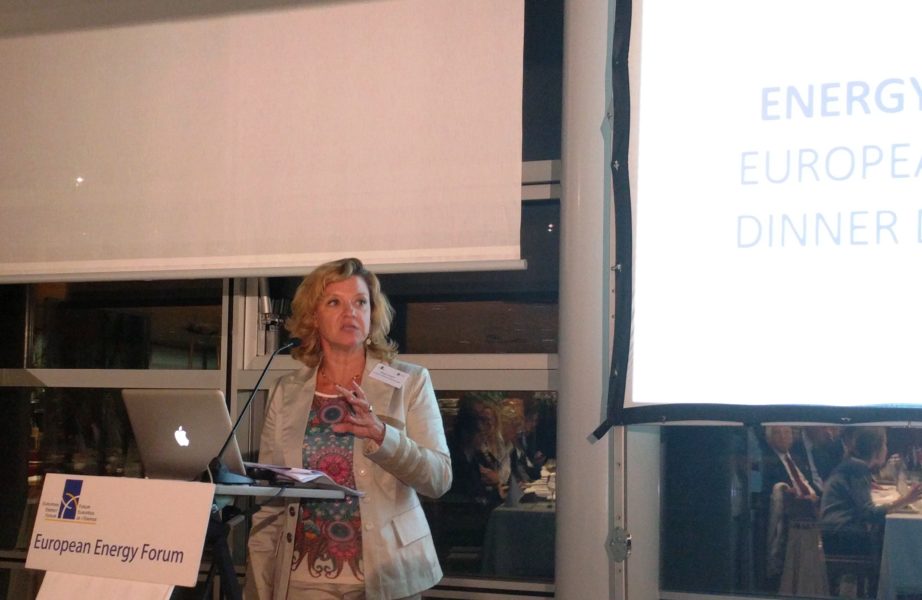
During the debate, organized by the European Energy Forum, Marco Mensink, Cefic Director General, presented the vision of the chemical industry and Monica Frassoni, President of the European Alliance to Save Energy (EU-ASE), presented the views of the the business represented  by EU-ASE. Ms Frassoni acknowledged the energy saving potential in the building sector as well as the need of ambitious targets to provide the business community with the necessary regulatory long term framework to attract investments i the European Union and boost the energy efficiency market.

Follow us


Privacy Policy

© All right reserved

In a fast-changing political and economic environment, 2025 was a year of continued efforts to strengthen security, stability, and competitiveness for European businesses.

Throughout the year, our work demonstrated that energy efficiency is not only essential to achieving climate goals, but also a key driver of innovation, energy independence and sustainable long-term growth across Europe.

Strong engagement with policymakers, combined with the successful organisation of the 4th European Energy Efficiency Day, highlighted the importance of collaboration and dialogue in advancing shared objectives. Partnerships across sectors and institutions remained central to delivering impact and shaping effective energy policies.

Looking ahead to 2026, we will intensify our efforts to secure the regulatory certainty that can accelerate the energy transition, while providing businesses with the investment confidence they need and strengthening Europe’s  competitiveness.

Read the full Activity Report here

Joint Breakfast debate: Common views on the Energy Efficiency potential in building and transport sectors

Enel and EU-ASE welcome the revision of the Directives on Energy Efficiency and Energy Performance of Buildings proposed within the Clean Energy for All Europeans package in view of setting an EU long-term framework for improving energy efficiency investments: key drivers of the low carbon economy transition. Buildings and transports offer a huge potential for efficiency gains: in-depth evaluation1 of the aggregated savings potentials in different sectors found that buildings and transport have the highest share for cost-effective energy savings, respectively 61% and 41%, followed by the tertiary sector (38%) and industry (26%).

In addition, in 2015 the International Energy Agency (IEA) estimated that, in Europe, approximately 70% of emissions cuts to stay below 2°C will need to come from energy efficiency which was described by the IEA itself as an energy source in its own right.

There is no technology gap and energy efficiency is a business opportunity not only for solution providers. Also the power sector, which has already come a long way in its transformation towards decarbonization, can be the key driver for further driving energy savings in these end-use sectors.

Enel and EU-ASE believe that an effective EU policy framework on energy efficiency should ensure predictability and security for investments, consistency, flexibility and market-driven cost-effectiveness, with a specific focus on the urban context where the majority of the population lives and significant co-benefits arise as improvement of air quality and minimization of related health risks.

Exploiting the synergies between the building and transport sectors and the electricity system means integrating efficient technologies and services through the smart grids, towards the development of smart cities.

BUILDINGS 

Citizens spend 90% of their lives inside buildings which currently account for 40% of EU primary energy demand and represent 36% of CO2 emissions. 9 out of every 10 of the existing buildings in the EU will still be standing and occupied by 2050 and 75% of them were constructed with low (or no) energy efficiency requirements. This is why existing buildings should be put at the center of the EU’s energy efficiency strategy by setting a reliable and coherent EU framework for the definition of national long-term renovation strategies for the entire building stock.

A reduction of energy consumption through energy efficiency measures must be prioritized to firmly apply the “Efficiency First” principle in building renovation, while boosting their integration as active players in the modern energy system.

Renovation strategies should be developed within each specific national energy transition context by planning in terms of districts and entire energy systems, rather than focusing only on individual buildings to reap the full potential of high-efficiency energy supply solutions and maximize the energy saving potential of the entire energy chain.

Digitalization will play a key role in managing and integrating renewable and distributed generation, while reducing energy consumption and empowering end-users towards energy efficient behaviours. Such market changes will be accelerated by the increasing ‘smart readiness’ of buildings able to respond to market signals through demand response. As a result, the role and value of transmission and distribution networks and infrastructure will surge. The change is not only technological but also cultural: operators, but also regulators will need to quickly evolve to meet the new challenges.

TRANSPORT 

Urban mobility accounts for 40% of all CO2 emissions of road transport. Electric vehicles (EV) are the solution to decarbonize transport, improve air quality and enhance energy efficiency as the efficiency of electric motors (80-90%) is much higher than the one of combustion engines (20-30%).

However, it is essential to stimulate their EU market penetration by removing the economic and non-economic barriers currently hindering a quicker uptake.

Smart grids play a crucial role within the EU’s decarbonisation process by supporting the development of e-mobility as well as a structural role in smart cities offering part of the infrastructure needed for the activation of new approaches of thinking and acting within urban ecosystem. On the demand side, smart grids and smart meters enable consumers to actively manage their own energy demand and put in place energy efficient behaviors. Demand side services provided by EV batteries and smart charging solutions can be a key catalyst for consumer’s empowerment, so important to drive energy savings.

Follow us


Privacy Policy

© All right reserved

In a fast-changing political and economic environment, 2025 was a year of continued efforts to strengthen security, stability, and competitiveness for European businesses.

Throughout the year, our work demonstrated that energy efficiency is not only essential to achieving climate goals, but also a key driver of innovation, energy independence and sustainable long-term growth across Europe.

Strong engagement with policymakers, combined with the successful organisation of the 4th European Energy Efficiency Day, highlighted the importance of collaboration and dialogue in advancing shared objectives. Partnerships across sectors and institutions remained central to delivering impact and shaping effective energy policies.

Looking ahead to 2026, we will intensify our efforts to secure the regulatory certainty that can accelerate the energy transition, while providing businesses with the investment confidence they need and strengthening Europe’s  competitiveness.

Read the full Activity Report here