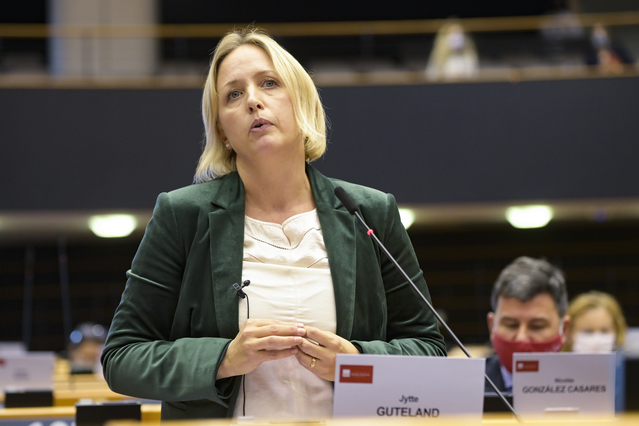
Energy efficiency for recovery and long term resilience

Over the last months, the Covid-19 pandemic has exposed the vulnerabilities of our economic, social and health systems. As national recovery plans will inject an unprecedented amount of finance into the economy, the priority should be clear: we must increase resilience in our society, modernise the economy and change the energy system to make it more sustainable and progressively carbon-free. Energy efficiency plays a key role in this, for a number of reasons.

First, energy savings are paramount for climate mitigation and emissions reduction. Second, energy efficiency is a powerful job creation factor and its value chain is deeply European. Last but not least investing in energy efficiency also means investing in European innovation, especially when it comes to the building sector.

From a legislative point of view, the next months will be crucial to advance energy efficiency with clear and ambitious policies. The Renovation Wave, published last October, started a process that intends to achieve a highly efficient and decarbonised building stock. This can be done mainly through the revision of the Energy Performance of Buildings Directive, with the ambition to increase the renovation rates to the needed 3% per year and the review of the Energy Efficiency Directive and the operationalisation of the “Energy Efficiency First” principle.

The EU decision makers’ agreement on the Climate Law and on the intermediate 55% emission reduction by 2030 set Europe on the path towards climate neutrality by 2050. It is the right path to stimulate investments and energy efficiency can greatly support this effort.

Harry Verhaar
Chair of the Board of Directors
European Alliance to Save Energy

Follow us


Privacy Policy

© All right reserved

Carbon pricing is no silver bullet to decarbonise buildings across Europe

The introduction of a carbon price in the building sector will only encourage fuel switching and risks burdening those least able to pay with the cost of decarbonisation. If implemented, it should be complemented with legislation to boost energy efficiency.

by Monica Frassoni, President of the European Alliance to Save Energy (EU-ASE)

At the end of 2020 European Union leaders agreed to increase the bloc’s emission-reduction target to at least 55% by 2030, confirming the EU’s commitment to becoming the first climate-neutral continent by 2050. If the EU wants to achieve this ambitious goal, it needs to increase its action to decarbonise one of its most energy-intensive and polluting sectors: buildings.

As an example, the CO2 emissions from space and water heating in residential buildings represent 12% of the total EU emissions, as much as all cars in Europe combined. This is the case because more than 75% of the energy produced for heating homes currently comes from fossil fuels. Switching from fossil to low or zero-carbon fuels has an enormous potential in terms of CO2 savings—an estimated 291 tonnes of CO2 by 2050.

In this context, the European Union is discussing the opportunity to establish a carbon price in the building sector. However, that is far from being simple.

Before implementing carbon pricing, lawmakers must carefully assess its different modalities (from a tax to market-based instruments, such as an emissions trading system) and impact on the building sector, in light of its specificities. These include the low-price elasticity of energy demand, which shows that energy prices are inelastic in both the short and long term: energy consumption will fall by less than 1% in response to a 1% increase in energy prices. Such low elasticity could only be overcome with a significantly higher CO2 price.

Moreover, carbon pricing for buildings may be ineffective due to the peculiar management or ownership structure of the sector. This generates split incentives which tend to blur the responsibilities and the related costs for fuel switch. Even if a fuel switch is achieved, a carbon price alone is expected to have a limited impact in terms of buildings’ energy efficiency gains, which are crucial for achieving decarbonisation quicker and with fewer resources through renovations—especially deep ones—of the existing building stock.


Read the full article on FORESIGHT Climate & Energy

Follow us


Privacy Policy

© All right reserved

EU needs mandatory targets and means to save energy

The European Commission needs to bring in legally-binding energy efficiency targets to support building renovation and give member states the support they need to reach them.

by Kamila Waciega, Public Affairs Director for Energy at Veolia, and Ville Niinistö, Finnish Member of the European Parliament and coordinator for the Greens/EFA group in the Committee on Industry, Research and Energy.

In its recent communication on the European Union climate target for 2030, the EU Commission described energy efficiency legislation and policies as essential instruments contributing to the achievement of the new 2030 greenhouse gas reduction.

However, according to the accompanying impact assessment and the evaluation of National Energy and Climate Plans, the EU will surpass its current target for renewable energy by 1.7%, while it will still fail to meet its current 2030 efficiency target by 3%.

A similar result is expected for the energy efficiency target for 2020.

As the Commission is in the process of revising the Energy Efficiency Directive (EED), it is crucial to seize this opportunity to address the reasons for such an outcome of current energy efficiency policies.

One clear issue is the fact that the renewable energy target is binding at EU level, while the energy efficiency one still is not.

In the current context of dire health, economic and environmental crisis, we cannot afford this discrepancy. We need both higher and nationally binding energy efficiency targets, given all the benefits that investments in this segment can reap.

Following the position of the European Parliament, which asked for 60% emissions reduction by 2030, and taking into account the abovementioned impact assessment, the existing target for energy efficiency needs to be increased to 45% to untap the energy efficiency potential.

To ensure delivery, the EU level target should be made binding.

However, setting a better target is not enough. The most arduous element is providing means to achieve it. Those are regulatory and financial, and both can be ensured through the EED, which is currently planned for revision by June 2021.


Read the full article on EURACTIV

Follow us


Privacy Policy

© All right reserved

Renovation Wave focuses on energy efficiency, minimum standards and finance

The European Commission unveiled today its much-anticipated Renovation Wave initiative. The strategy outlines the steps needed to renovate more than 220 million existing buildings by 2050.

It also calls for the EU to at least double the current annual rate of buildings energy efficiency renovation by 2030 and to foster deep energy renovations. This would equal to renovating up to 35 million buildings over the next 10 years.

The European Alliance to Save Energy (EU-ASE) welcomes the initiative, which comes at a crucial moment for Europe’s short-term economic recovery and long-term path towards climate neutrality.

The Renovation Wave rightly underlines the importance of energy efficiency first principle as a horizontal guiding principle of European climate and energy governance and beyond, to make sure we only produce the energy we really need. The Commission announced the publication of the guidance on the energy efficiency first principle in early 2021.

A key element of the initiative is the proposal of a phased introduction of mandatory minimum energy performance standards for existing buildings, as part of next year’s revision of the Energy Performance of Buildings Directive (EPBD).

EU-ASE highly welcomes the accompanying document on EU funding of the Renovation Wave and the commitment by the Commission to ensuring that buildings are included as a top priority when assessing national recovery and resilience plans.

Monica Frassoni, President of the European Alliance to Save Energy said:

“We welcome the Renovation Wave as a key strategy to increase the energy efficiency of buildings by reducing their energy consumption and by fostering the greater quality, rate, and depth of comprehensive renovations. If this strategy is rightly implemented, the benefits will be tremendous. These will include improved comfort, cleaner indoor and outdoor air quality, reduced energy bills, local qualified jobs, and millions of citizens lifted out of energy poverty”.

Harry Verhaar, Chair of the board of the European Alliance to Save Energy and Head of global public & government affairs at Signify said:

“We welcome the Renovation Wave as the best kick-start of economic recovery in Europe. In particular, the decision to extend Article 5 of the Energy Efficiency Directive to all public buildings, including private schools and hospitals, is excellent news. Increasing the renovation rate of our buildings is the biggest job machine at our disposal, and these are good local jobs that replace expensive energy imports. Now let’s use the Renovation Wave as a lighthouse on our way to climate neutrality”.

Bonnie Brook, Vice-Chair of the board of the European Alliance to Save Energy and Senior Manager Industry Affairs – Building Automation at Siemens Switzerland said:

“A Renovation Wave is essential as for the EU it will be impossible to become carbon neutral without massively renovating its old and inefficient building stock. Renovation, decarbonisation, and digitalisation should go hand in hand to achieve Europe’s ambitious climate targets. For these reasons, we welcome this initiative, hoping that it will be followed by the
necessary legislation to make sure that smart infrastructure and innovative business models will enable and accelerate the energy transition for all Europeans.”

Bertrand Deprez, Vice-Chair of the board of the European Alliance to Save Energy and Vice-President EU government affairs at Schneider Electric said:

“Making our buildings energy efficient is key to reconcile Europe’s climate objectives with rapid economic recovery across Europe. The added value of this initiative is that it can be a strong driver for both. To ensure that the Renovation Wave objectives are met, the EU and its Member States need to scale-up the renovation rate by combining the principle of efficiency first with the deployment of distributed energy resources and the rise of digital technologies.”

With regards to the next steps, the Commission has outlined a list of related upcoming actions and their indicative timelines.

Contact

Matteo Guidi, Communication Officer
matteo.guidi@euase.eu
+32493372142

The European Alliance to Save Energy (EU-ASE), established in 2010 by some of Europe’s leading multinational companies, creates a platform from which companies can ensure that the voice of energy efficiency is heard across the business and political community. EU-ASE members have operations across the 27 Member States of the European Union, employ over 340.000 people in Europe and have an aggregated annual turnover of €115 billion.


 

Follow us


Privacy Policy

© All right reserved

European Parliament push for 60% climate target is good news also for businesses

The European Parliament voted to increase the EU emissions reduction target by 2030 to at least 60% as part of the EU Climate Law.

By doing so, the Parliament adopted a position that is more ambitious than the Commission’s 55% reduction proposal.

This is good news for the EU’s climate ambition and international leadership in a decade which will be crucial in the fight against climate change.

It is also good news for businesses. Indeed, a higher EU climate ambition provides investors and businesses with a clear direction and more certainty to plan their investments and strategic choices, that have to be directed towards the goal of climate neutrality by 2050.

Monica Frassoni, president of the European Alliance to Save Energy commented:

This is a major step in the right direction to achieve the EU carbon neutrality goal and a green economic recovery. MEPs showed to EU leaders the level of ambition that is needed. The path to meet this target is clear: focusing on energy efficiency and renewables is the best way to go for the Union and its Member States. This should be reflected in all upcoming investments and funds, starting from the MFF and national Recovery and Resilience Plans.

EU leaders will start discussing the EU 2030 climate target next week at a European Council. An EU-wide agreement on the new target is expected at the December European Council.


Contact

Matteo Guidi, Communication Officer
matteo.guidi@euase.eu
+32493372142

The European Alliance to Save Energy (EU-ASE) was established in December 2010 by some of Europe’s leading multinational companies. The Alliance creates a platform from which companies can ensure that the voice of energy efficiency is heard from across the business and political community. EU-ASE members have operations across the 27 Member States of the European Union, employ over 340.000 people in Europe and have an aggregated annual turnover of €115 billion.

 

Follow us


Privacy Policy

© All right reserved