To deliver the ambition of new energy efficiency directives

Switching all conventional light points to LEDs is one of the easiest, quickest and most cost-effective ways of reducing energy consumption, says Alice Steenland from Signify says Alice Steenland of Signify in Foresight Climate & Energy ahead of the second edition of European Energy Efficiency Day.

A simple change can make a big difference.

Simply swapping conventional lights for LED alternatives can reduce lighting-related energy usage by 50% or more. With smart lighting management in place, energy savings can approach 80% over conventional technology.

In Europe, half of all currently installed lights, residential and commercial combined, are conventional. This represents an enormous opportunity. Replacing all conventional lights in the EU with LED alternatives could save an estimated €65 billion in energy costs, depending on energy rates, and could reduce CO2 emissions by 51 million tonnes—not just once, but every single year.


Read the full article on Foresight Climate & Energy.

More information on Energy Efficiency Day here & Register here.
Follow us


Privacy Policy

© All right reserved

Future of the Energy Union: bringing the transformative potential of energy efficiency in the National Energy and Climate Plans

As EU member states prepare to submit their revised National Energy and Climate Plans (NECPs) to the European Commission on 30 June, they must pay greater attention to energy efficiency, writes EU-ASE President Monica Frassoni in Euractiv.

A future energy system must be highly energy and resource efficient, based on renewables, secure, competitive, affordable and of course, safe. One that can respond to the climate, energy and water crises that increasingly perturb our economy and create social tensions.

Reducing energy needs and doing this through ready-to-use technologies and a system approach is key to success of Europe’s future energy union and the Green Deal. The Energy Efficiency community needs therefore to have a regular seat at the table.

This is not always the case.


Read the full article byMonica Frassoni in Euractiv.

Follow us


Privacy Policy

© All right reserved

The water-energy nexus: connecting water saving, energy efficiency and the reduction of emissions.

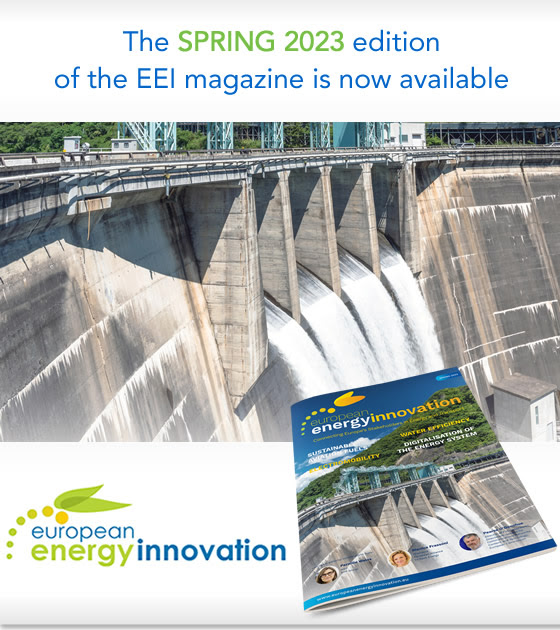
Water and energy are probably two of the most essential, interlinked, and precious resources in our daily lives. In our current climate and energy crisis, unleashing the potential of the water-energy nexus will drive substantial water and energy savings, reducing emissions and increase the competitiveness of European industry, says Monica Frassoni in the Spring 2023 issue of European Energy Innovation Magazine.

The great thing is that we already have the technologies and solutions to simultaneously save water and energy.  A strong policy framework is needed to incentivise water and energy efficiency and enable the deployment at scale of these solutions. The water-energy nexus should be better reflected in legislation, and lawmakers should fully consider the benefits stemming from water efficiency as a key driver to delivering energy savings.


Read the full article byMonica Frassoni in European Energy Innovation Magazine. 

Follow us


Privacy Policy

© All right reserved

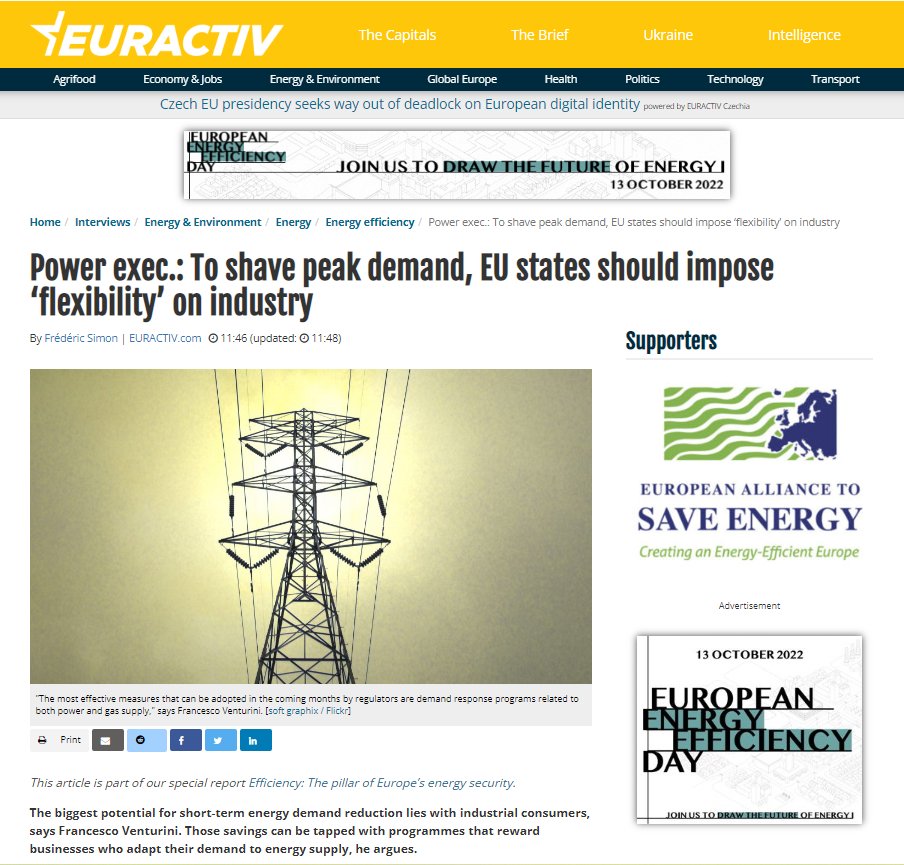
Interview: To shave peak demand, EU states should impose ‘flexibility’ on industry

“The EU’s high gas dependency can be reduced through both electriciation and energy efficiency,” Francesco Venturini of Enel X Global Retail told Frédéric Simon of Euractiv ahead of European Energy Efficiency Day 2022.

The biggest potential for short-term energy demand reduction lies with industrial consumers, says Francesco Venturini. Those savings can be tapped with programmes that reward businesses who adapt their demand to energy supply, he argues.

Interview highlights:

  • Big industrial loads offer the biggest opportunity to efficiently manage peak electricity consumption
  • EU countries should introduce forms of mandatory flexibility, rewarding businesses that are able to adapt their demand to electricity supply
  • Europe has sufficient gas storage to get through this winter without rationing. Potential shortages could especially affect the winter 2023-2024 and the following ones
  • Today’s high gas prices are driven mostly by speculation. This should be reined in with the introduction of a temporary price cap on European gas
  • For private consumers, regulations should be adjusted to encourage energy self-consumption, like solar panels and batteries. Other examples include citizen-led Energy Communities, tax deductions for heat pumps, removing subsidies for gas boilers, and a ‘right to plug-in’ for consumers
  • When it comes to public spending, Enel believes policies that promote energy savings from direct fossil fuel combustion must be excluded from eligible measures to achieve EU members states’ energy savings obligations

Read the full interview in Euractiv.

More information on Energy Efficiency Day here.

Follow us


Privacy Policy

© All right reserved

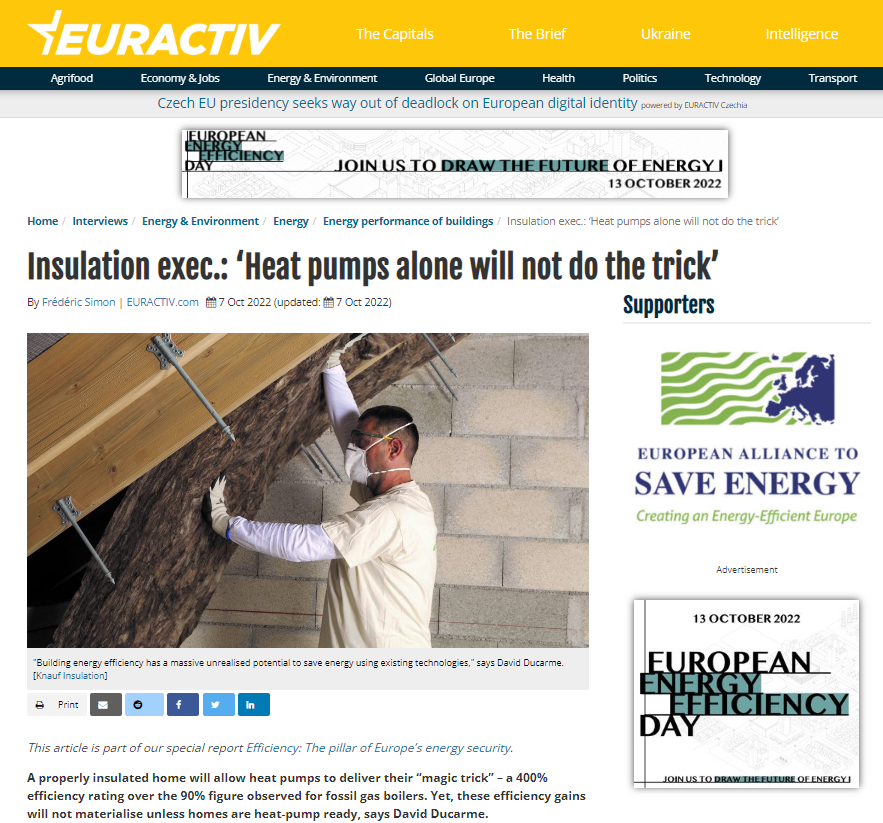
Insulation exec.: ‘Heat pumps alone will not do the trick’

Energy efficiency has a huge role to play to deliver renewable energy to households whilst limiting costly investments into energy capacity for society, David Ducarme, Group chief operating officer at Knauf Insulation told Frédéric Simon of Euractiv.

A properly insulated home will allow heat pumps to deliver their “magic trick” – a 400% efficiency rating over the 90% figure observed for fossil gas boilers. Yet, these efficiency gains will not materialise unless homes are heat-pump ready, says David Ducarme.

Interview highlights:

  • Long-term measures to reduce energy demand are essential to address the root causes of the energy crisis Europe is facing.
  • Buildings remain Europe’s year-round weak spot in the energy transition. Drastically improving the energy performance of buildings envelopes would decrease by 45% the energy demand for heating and cooling from buildings.
  • Heat pumps alone will not do the trick. A properly insulated home will allow heat pumps to deliver their “magic trick” – pulling four units of heat out of each kilowatt-hour (kWh) of electricity. Otherwise, they will not deliver as much.
  • Heat pumps will also pose challenges to the electricity grid, with demand for electric heating set to increase by 356 Terawatt hours per year (TWh/y). Without insulation, the additional generation capacity needed to meet peak winter demand would need to be 2,129 TWh/year, almost five times more.
  • The revised Energy Performance of Buildings Directive (EPBD) and Energy Efficiency Directive (EED) will be the backbone of resilient and decarbonised building stock.
  • Long-term decarbonisation of the building stock also entails setting long-term trajectories on whole-life carbon reduction.


Read the full interview in Euractiv.

More information on Energy Efficiency Day here.

Follow us


Privacy Policy

© All right reserved