“We still need to walk the walk in how energy efficiency interacts with other actors. The partnership between RES and energy efficiency is crucial and can provide 94% of the reductions in energy CO2 related emissions.”
Monica Frassoni, President of EU-ASE
She talked at large about the fact that policy makers and companies should understand that the decarbonisation of the EU economy cannot be achieved without energy efficiency investments. On this note, she gave some concrete examples of how the reductions that we would obtain by implementing such measures would be less costly.
Ms Frassoni also spoke about the “very big elephant in the room” no one had yet addressed, in reference to the public financing of fossil fuels. “I think that when the EIB changed its regulation to make it less prone towards fossil fuels it gave a very powerful signal that is very useful to all sectors”, she added, “but, at the same time there are still exceptions and loopholes”. She underlined that the energy efficiency community is worried about the direct competition role fossil fuels, especially gas, are currently playing in the sector, since energy efficiency investments are harder to “be seen” and “more complex to be put in practice”.
EU-ASE’s President concluded her presentation giving some recommendations on behalf of the energy efficiency community, underlying the importance of applying the Energy Efficiency First principle, pushing harder for more ambitious, binding targets, and stepping up the efforts for good implementation of existing policies to provide investors with a very much needed confidence.
Click here to watch Ms Frassoni’s full intervention (minute 02:15:00).
The event, held 10-11 July in Brussels, gathered several experts and policy makers from the energy, climate and environment framework
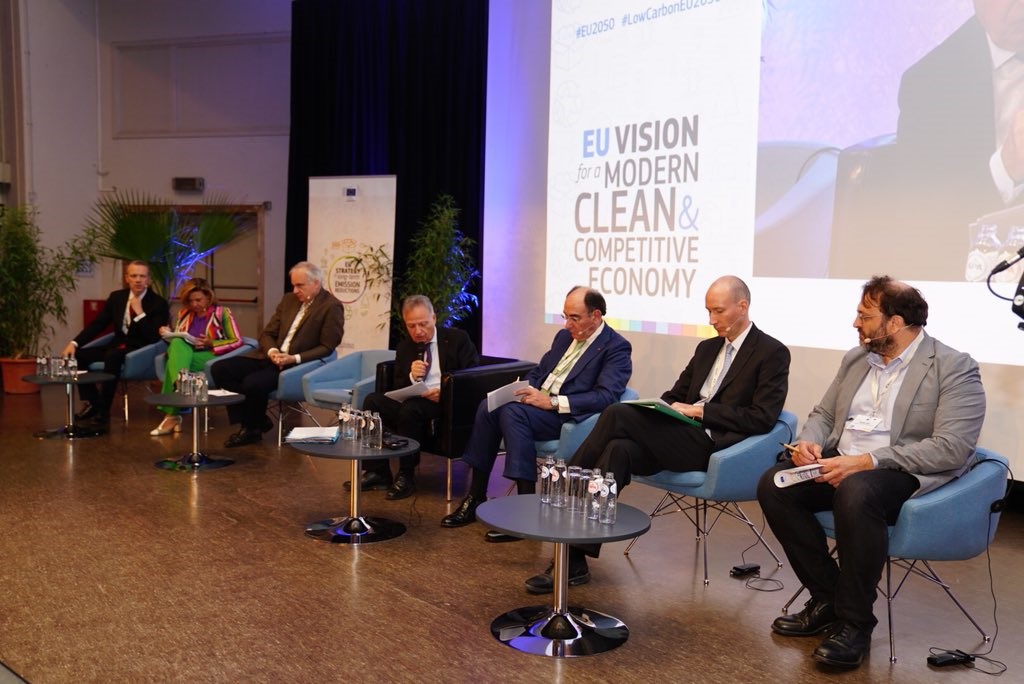
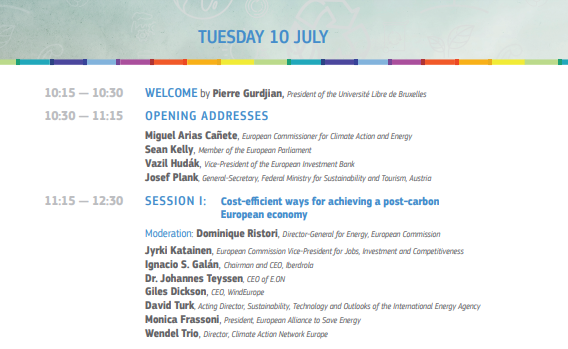
Monica Frassoni, President of the European Alliance to Save Energy, took part yesterday in the European Commission’s stakeholder event ‘EU’s vision for a modern, clean and competitive economy’, as a speaker in the panel ‘Cost-efficient ways for achieving a post-carbon European economy’. Apart from Ms Frassoni, the panel, whose titfeatured a high-level list of experts from the sector, representing the policy, business and NGO voices: EU Commission Vice President Jyrki Katainen; Ignacio S. Galán, Chairman and CEO of Iberdrola; Dr. Johannes Teyssen, CEO of E.ON; Giles Dickson, CEO, WindEurope; David Turk, Acting Director, Sustainability, Technology and Outlooks of the International Energy Agency; and Wendel Trio, Director of CAN Europe.
During her intervention, Ms Frassoni stressed the very important moment the European Union is currently facing in terms of integration and that setting a long-term strategy with clear and concrete milestones should be at the top of the list of the Union’s priorities. She also addressed the necessary partnership between energy efficiency and the rest of actors in the energy transition, such as renewable energy sources or utilities. “We still need to walk the walk in understanding that energy efficiency is a crucial element in the way in which companies must work”, she pointed out, “the partnership between RES and energy efficiency can provide 94% of the reductions in energy CO2 related emissions”.