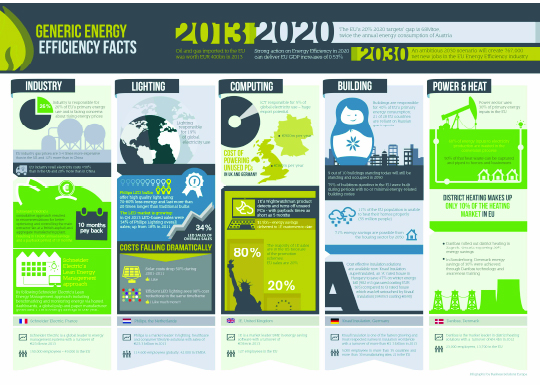
Infographic: We are Energy Efficiency!

Generic Energy Efficiency Facts:

  • 2013 Oil and gas imported from the EU was worth EUR 400bn in 2013
  • 2020 The EU`s 20% 2020 targets` gap is 68Mtoe, twice the annual consumption of Austria
  • Strong action on Energy Efficiency in 2020 can deliver EU GDP increases of 0,53%
  • 2030 An ambitious 2030 scenario will create 767,000 net new jobs in the EU Energy Efficiency industry

Follow us


Privacy Policy

© All right reserved

EU-ASE contribution to the public consultation on “A 2030 framework for climate and energy policies”

The 2020 framework was designed without a comprehensive assessment of the synergies and potential trade-offs between the three targets (as recognized by the Green Paper – page 7, 5th paragraph) and had only two binding targets: one for raising the share of energy consumption produced from renewables (RES) in the European Union (EU) and one for EU greenhouse gas (GHG) emissions reduction. The energy efficiency (EE) target, however, was not binding. In short, the framework is fragmented.

This situation has led to 1) a lack of the necessary regulatory support (i.e. binding targets) for energy efficiency (EE) for which the EU 20% improvement target by 2020 will not be met, 2) a remarkable growth for RES in general terms, but in a incoherent and inconsistent way among different Member States; and 3) the failure of the Emission T rading S cheme (ETS), conceived as the major driver for long term low carbon investments, due to a large surplus of ETS allowances. This only was caused in part by the economic crisis.

To date the EU’s 2020 Climate and Energy framework has been fundamental in reducing GHG emission and strengthen RES. However, it clearly has not delivered the amount of energy savings expected and did not create the right long term signals for investment in EE solutions. More efforts must be focused on EE across Europe to provide industry with certainty in the policy framework and improve consumer acceptance on EE technology, products and services. A holistic approach of this future package is needed to avoid sub- optimization of certain sectors.

When designing policies for 2030, for the business perspective it would be a mistake to see a trade- off between the need for a binding target- based regulatory framework for 2030 and the competitiveness of European industry.

What is in fact needed is a cohesive 2030 framework based on three binding European targets. This will, in our opinion, restore economic competitiveness, reduce energy costs and prices, increase security of supply and sustain economic growth in the EU.



Follow us


Privacy Policy

© All right reserved

“The case for European Energy Saving Target for 2030”

By adopting an ambitious mandatory energy saving target for 2030, Europe could reduce energy prices, create jobs, decrease energy consumption and cut energy imports.


Follow us


Privacy Policy

© All right reserved

Energy efficiency: multiple and collective benefits for Europe and why energy efficiency should have a central role in DG ENTER strategy for a new EU industrial policy

This document provides an overview of the multiple benefits of an energy efficient Europe.

The objective is to draw attention to:

  • the economic, environmental and social potential of a European energy efficiency market


and to provide a multi-stakeholder contribution of vision and ideas for:

  • the ongoing development of DG ENTR Communication on a new industrial policy for Europe


The non-paper is presented in four sections aimed at answering the following questions:

  1. What are the multiple and collective benefits that would result from a boost to the European energy efficiency market?
  2. What are the main barriers to the development of a European energy efficiency market?
  3. What are the tools which would solve these problems?
  4. What are the financial resources available for ambitious energy efficiency projects in the EU?


This non paper has been drafted by the European Alliance to Save Energy (EU-ASE) with the support of NGOs and other European stakeholders.


Follow us


Privacy Policy

© All right reserved

“The case for energy efficiency and why the EU must act NOW”

In 2008, faced with the challenges of global climate change, security of energy supply and the increasing scarcity of natural resources, the European Union (EU) committed to reduce greenhouse gas emissions by 20%1, pledged to ensure that 20% of EU final energy consumption would come from renewable energy sources, and called for a reduction in energy use across Europe by 20%. The targets for emissions and renewable energy sources were made legally binding; the EU is on track to achieve these targets. The commitment to save 20% of energy was not made legally binding and as a result, as it stands today, the EU is expected to achieve only 9% of its targets by 20202, not even 50% of its energy savings goal.


Follow us


Privacy Policy

© All right reserved