Back to school with our attention on energy efficiency
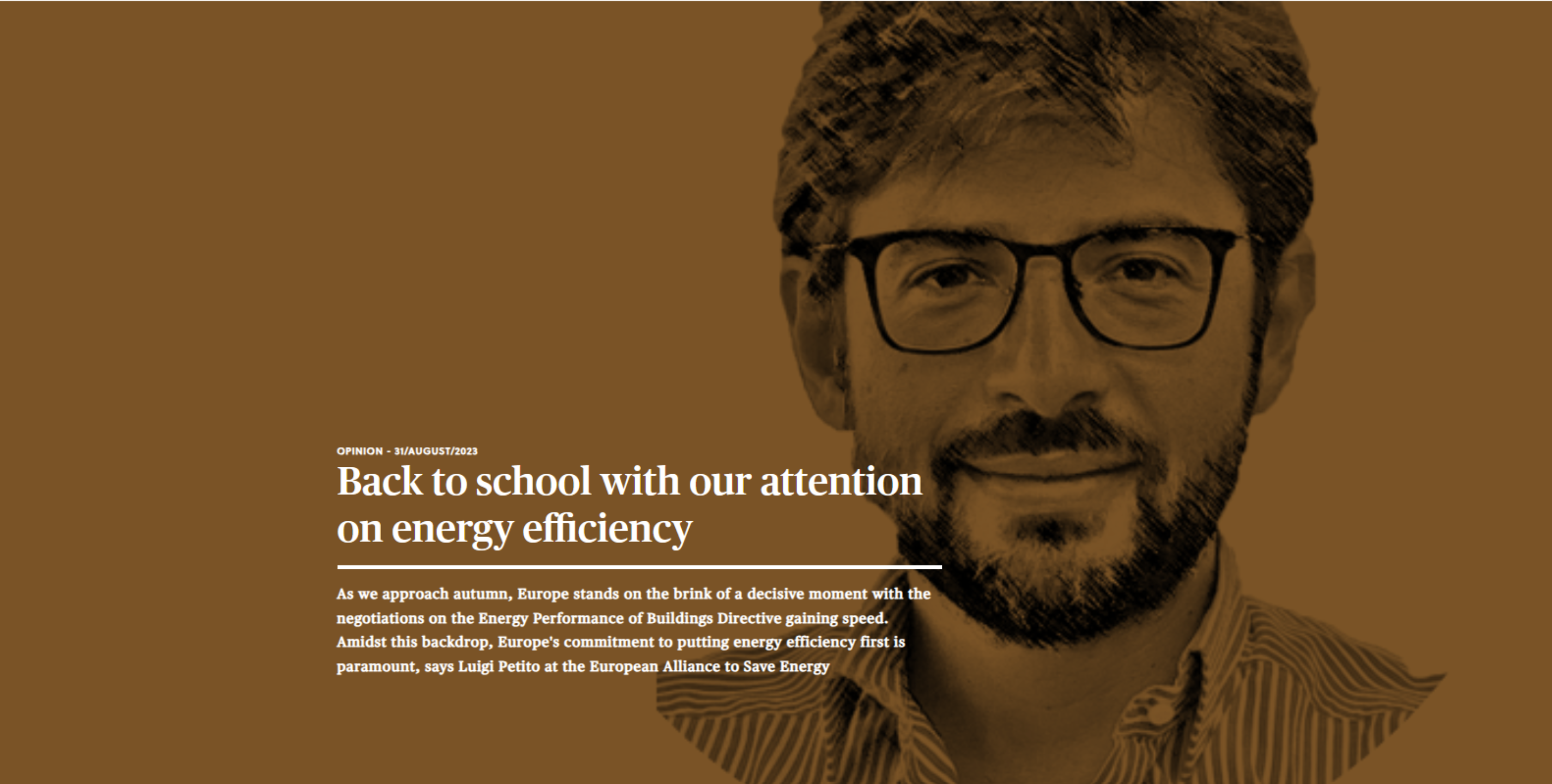
“As we approach the autumn season, Europe stands on the brink of a decisive momentvwith the negotiations on the Energy Performance of Buildings Directive gaining speed. Amidst this backdrop, Europe’s commitment to putting energy efficiency first is paramount,” says Luigi Petito of the European Alliance to Save Energy (EU-ASE) in Foresight Climate & Energy, ahead of the second edition of European Energy Efficiency Day.

The gains made by efficiency investment outweight the upfront cost​​.

In 2019, the European Union​​ set its sights on achieving climate neutrality by 2050. This​ was put into action through ​the European Climate Law. This not only enshrined the objective within the EU’s legal framework but also charted a course for an interim target—a reduction of greenhouse gas emissions by no less than 55%​ by 2030​ compared to the 1990 baseline, on the trajectory toward 2050.

​​The seismic geopolitical events of 2022, marked by Russia’s invasion of Ukraine, have acted as a catalyst for Europe’s energy agenda. More than five hundred days since the beginning of the war, a consensus has emerged—an imperative to accelerate Europe’s transition towards decarboni​s​​ation, thereby diminishing ​Europe’s​​ reliance on fossil fuels. ​​​ 

Within this context, a response to the energy crisis materiali​s​​ed through the REPowerEU ​package​, outlining the strategic goal of liberating the EU from its dependence on Russian fossil fuels well before 2030.

Read the full article in Foresight Climate & Energy.

More information on Energy Efficiency Day here & Register here.
Follow us


Privacy Policy

© All right reserved

In a fast-changing political and economic environment, 2025 was a year of continued efforts to strengthen security, stability, and competitiveness for European businesses.

Throughout the year, our work demonstrated that energy efficiency is not only essential to achieving climate goals, but also a key driver of innovation, energy independence and sustainable long-term growth across Europe.

Strong engagement with policymakers, combined with the successful organisation of the 4th European Energy Efficiency Day, highlighted the importance of collaboration and dialogue in advancing shared objectives. Partnerships across sectors and institutions remained central to delivering impact and shaping effective energy policies.

Looking ahead to 2026, we will intensify our efforts to secure the regulatory certainty that can accelerate the energy transition, while providing businesses with the investment confidence they need and strengthening Europe’s  competitiveness.

Read the full Activity Report here

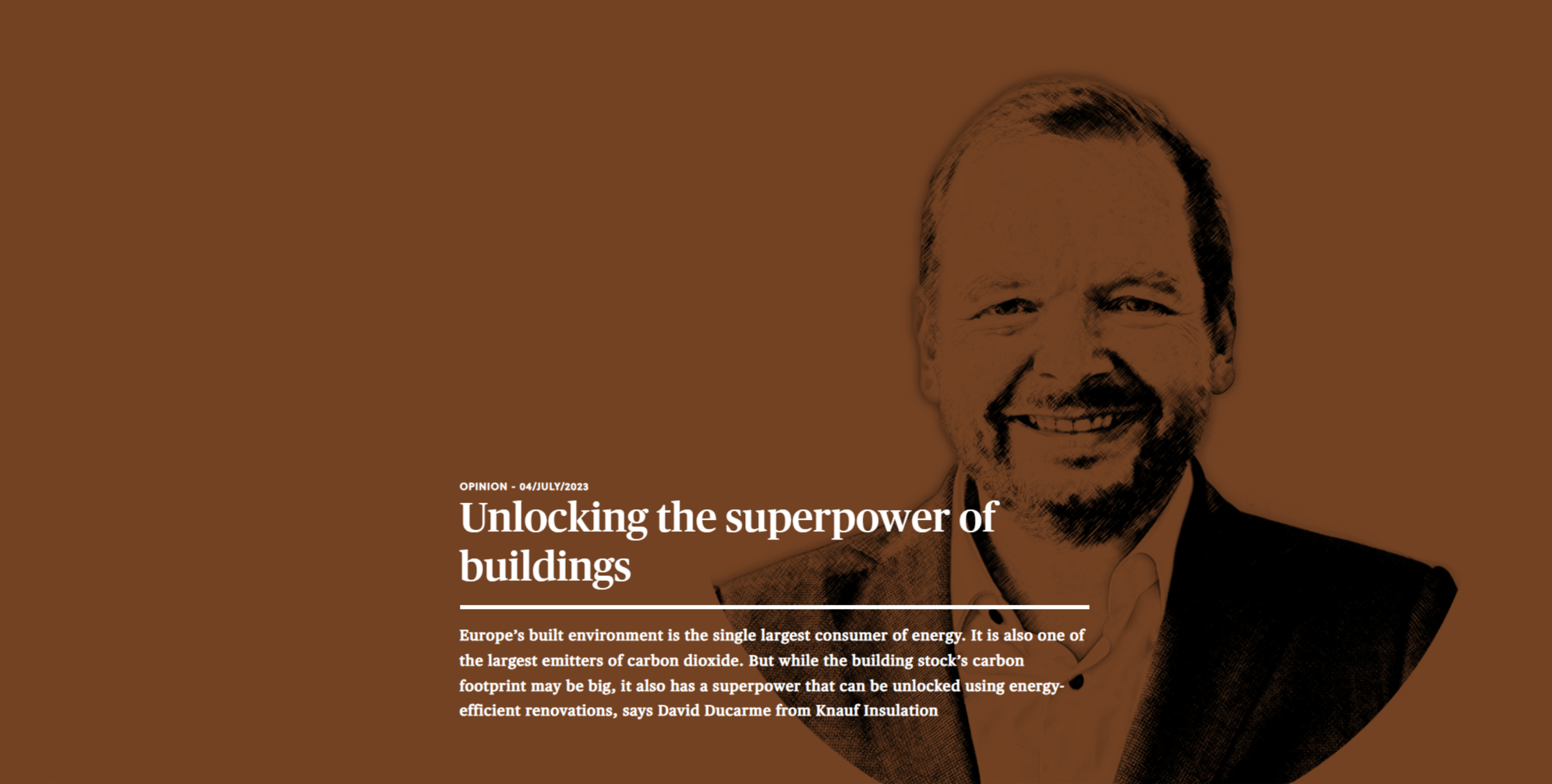
Unlocking the Superpower of Buildings

“The relatively simple act of renovating residential homes with proper insulation would result in a 44% reduction in the amount of natural gas used for heating. Th​is is​ not only a substantial decrease in energy consumption, it​ i​s also a big decrease in associated carbon emissions — This is​ the superpower of buildings” says David Ducarme of Knauf Insulation in Foresight Climate & Energy, ahead of the second edition of European Energy Efficiency Day.

Europe’s built environment is the single largest consumer of energy. It is also one of the largest emitters of carbon dioxide (CO2)​. But while the building stock’s carbon footprint may be big, it also has a superpower that can be unlocked using energy-efficient renovations.

For energy efficiency to be more than an after thought, it needs to be viewed as another element in the power mix. According to calculations by the Buildings Performance Institute of Europe (BPIE), the relatively simple act of renovating residential homes with proper insulation would result in a 44% reduction in the amount of natural gas used for heating.

This is not only a substantial decrease in energy consumption, it is also a big decrease in associated carbon emissions—a decrease that would help put Europe on track to becoming the world’s first climate-neutral continent.  

This is the superpower of buildings. 

But unlocking this power requires policies that deliver energy efficiency, which is why the revision of the Energy Performance of Buildings Directive (EPBD) could not be timelier 


Read the full article on Foresight Climate & Energy.

More information on Energy Efficiency Day here & Register here.
Follow us


Privacy Policy

© All right reserved

In a fast-changing political and economic environment, 2025 was a year of continued efforts to strengthen security, stability, and competitiveness for European businesses.

Throughout the year, our work demonstrated that energy efficiency is not only essential to achieving climate goals, but also a key driver of innovation, energy independence and sustainable long-term growth across Europe.

Strong engagement with policymakers, combined with the successful organisation of the 4th European Energy Efficiency Day, highlighted the importance of collaboration and dialogue in advancing shared objectives. Partnerships across sectors and institutions remained central to delivering impact and shaping effective energy policies.

Looking ahead to 2026, we will intensify our efforts to secure the regulatory certainty that can accelerate the energy transition, while providing businesses with the investment confidence they need and strengthening Europe’s  competitiveness.

Read the full Activity Report here

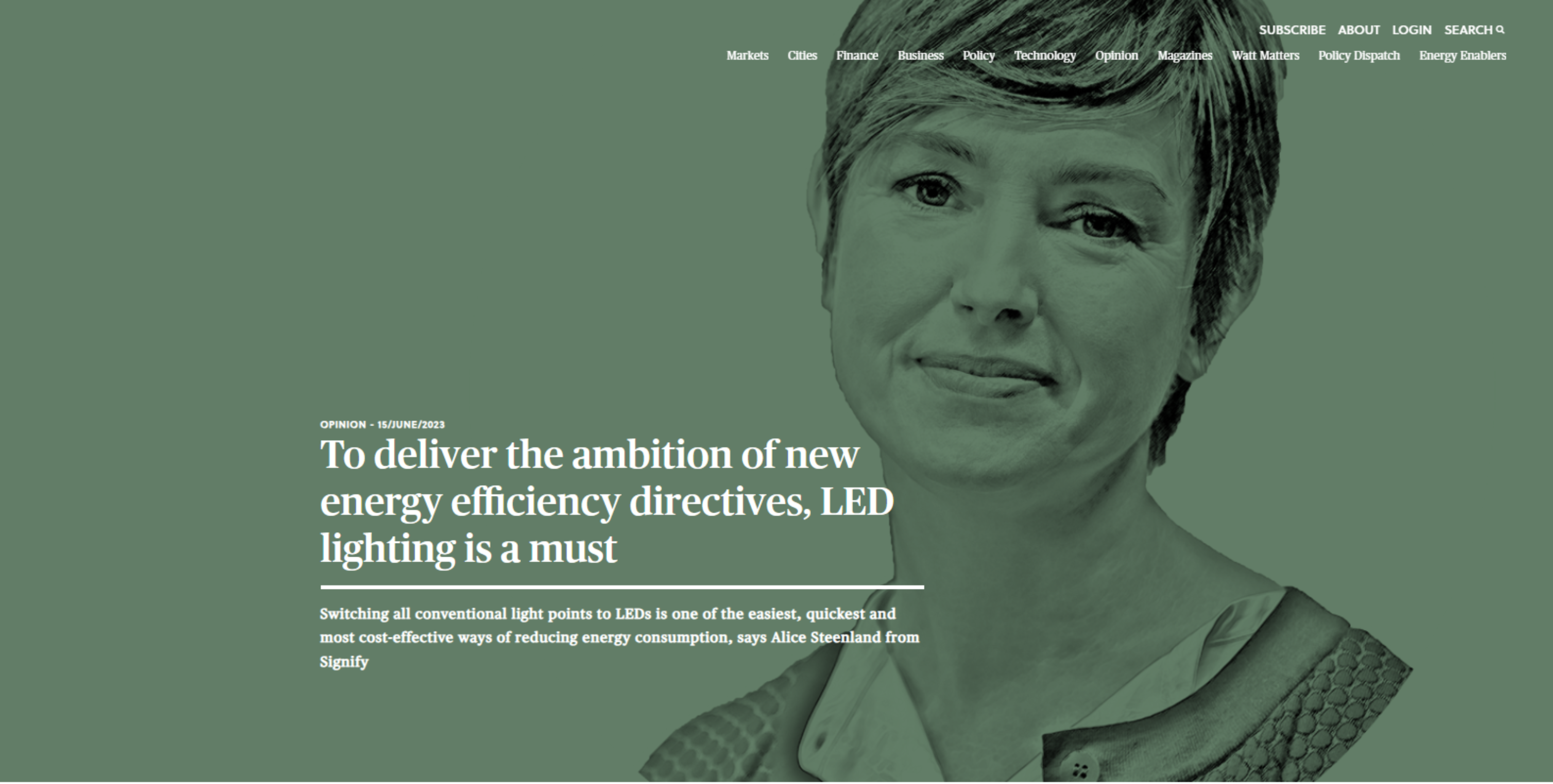
To deliver the ambition of new energy efficiency directives

Switching all conventional light points to LEDs is one of the easiest, quickest and most cost-effective ways of reducing energy consumption, says Alice Steenland from Signify says Alice Steenland of Signify in Foresight Climate & Energy ahead of the second edition of European Energy Efficiency Day.

A simple change can make a big difference.

Simply swapping conventional lights for LED alternatives can reduce lighting-related energy usage by 50% or more. With smart lighting management in place, energy savings can approach 80% over conventional technology.

In Europe, half of all currently installed lights, residential and commercial combined, are conventional. This represents an enormous opportunity. Replacing all conventional lights in the EU with LED alternatives could save an estimated €65 billion in energy costs, depending on energy rates, and could reduce CO2 emissions by 51 million tonnes—not just once, but every single year.


Read the full article on Foresight Climate & Energy.

More information on Energy Efficiency Day here & Register here.
Follow us


Privacy Policy

© All right reserved

In a fast-changing political and economic environment, 2025 was a year of continued efforts to strengthen security, stability, and competitiveness for European businesses.

Throughout the year, our work demonstrated that energy efficiency is not only essential to achieving climate goals, but also a key driver of innovation, energy independence and sustainable long-term growth across Europe.

Strong engagement with policymakers, combined with the successful organisation of the 4th European Energy Efficiency Day, highlighted the importance of collaboration and dialogue in advancing shared objectives. Partnerships across sectors and institutions remained central to delivering impact and shaping effective energy policies.

Looking ahead to 2026, we will intensify our efforts to secure the regulatory certainty that can accelerate the energy transition, while providing businesses with the investment confidence they need and strengthening Europe’s  competitiveness.

Read the full Activity Report here

Future of the Energy Union: bringing the transformative potential of energy efficiency in the National Energy and Climate Plans

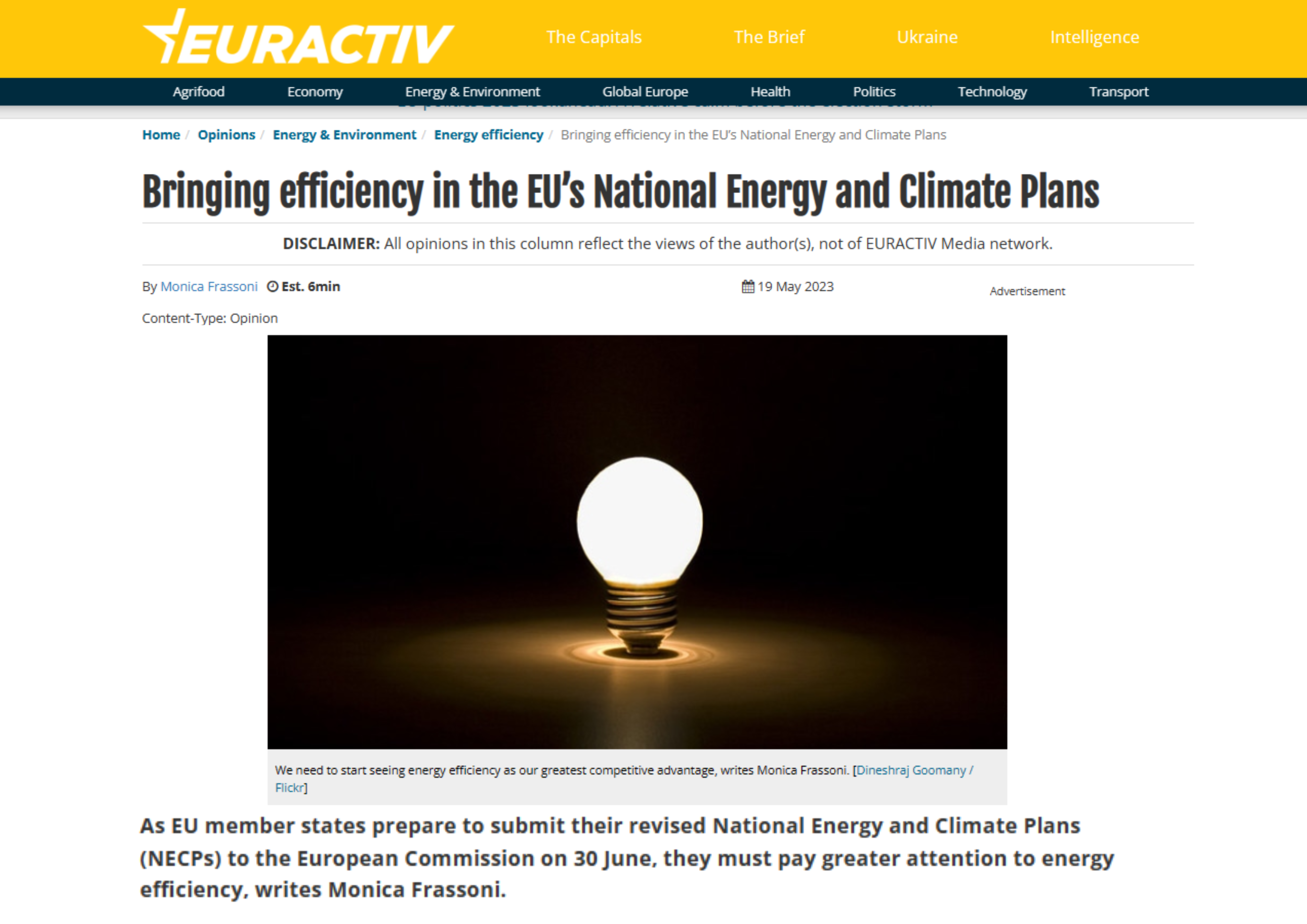
As EU member states prepare to submit their revised National Energy and Climate Plans (NECPs) to the European Commission on 30 June, they must pay greater attention to energy efficiency, writes EU-ASE President Monica Frassoni in Euractiv.

A future energy system must be highly energy and resource efficient, based on renewables, secure, competitive, affordable and of course, safe. One that can respond to the climate, energy and water crises that increasingly perturb our economy and create social tensions.

Reducing energy needs and doing this through ready-to-use technologies and a system approach is key to success of Europe’s future energy union and the Green Deal. The Energy Efficiency community needs therefore to have a regular seat at the table.

This is not always the case.


Read the full article byMonica Frassoni in Euractiv.

Follow us


Privacy Policy

© All right reserved

In a fast-changing political and economic environment, 2025 was a year of continued efforts to strengthen security, stability, and competitiveness for European businesses.

Throughout the year, our work demonstrated that energy efficiency is not only essential to achieving climate goals, but also a key driver of innovation, energy independence and sustainable long-term growth across Europe.

Strong engagement with policymakers, combined with the successful organisation of the 4th European Energy Efficiency Day, highlighted the importance of collaboration and dialogue in advancing shared objectives. Partnerships across sectors and institutions remained central to delivering impact and shaping effective energy policies.

Looking ahead to 2026, we will intensify our efforts to secure the regulatory certainty that can accelerate the energy transition, while providing businesses with the investment confidence they need and strengthening Europe’s  competitiveness.

Read the full Activity Report here

The water-energy nexus: connecting water saving, energy efficiency and the reduction of emissions.

Water and energy are probably two of the most essential, interlinked, and precious resources in our daily lives. In our current climate and energy crisis, unleashing the potential of the water-energy nexus will drive substantial water and energy savings, reducing emissions and increase the competitiveness of European industry, says Monica Frassoni in the Spring 2023 issue of European Energy Innovation Magazine.

The great thing is that we already have the technologies and solutions to simultaneously save water and energy.  A strong policy framework is needed to incentivise water and energy efficiency and enable the deployment at scale of these solutions. The water-energy nexus should be better reflected in legislation, and lawmakers should fully consider the benefits stemming from water efficiency as a key driver to delivering energy savings.


Read the full article byMonica Frassoni in European Energy Innovation Magazine. 

Follow us


Privacy Policy

© All right reserved

In a fast-changing political and economic environment, 2025 was a year of continued efforts to strengthen security, stability, and competitiveness for European businesses.

Throughout the year, our work demonstrated that energy efficiency is not only essential to achieving climate goals, but also a key driver of innovation, energy independence and sustainable long-term growth across Europe.

Strong engagement with policymakers, combined with the successful organisation of the 4th European Energy Efficiency Day, highlighted the importance of collaboration and dialogue in advancing shared objectives. Partnerships across sectors and institutions remained central to delivering impact and shaping effective energy policies.

Looking ahead to 2026, we will intensify our efforts to secure the regulatory certainty that can accelerate the energy transition, while providing businesses with the investment confidence they need and strengthening Europe’s  competitiveness.

Read the full Activity Report here