
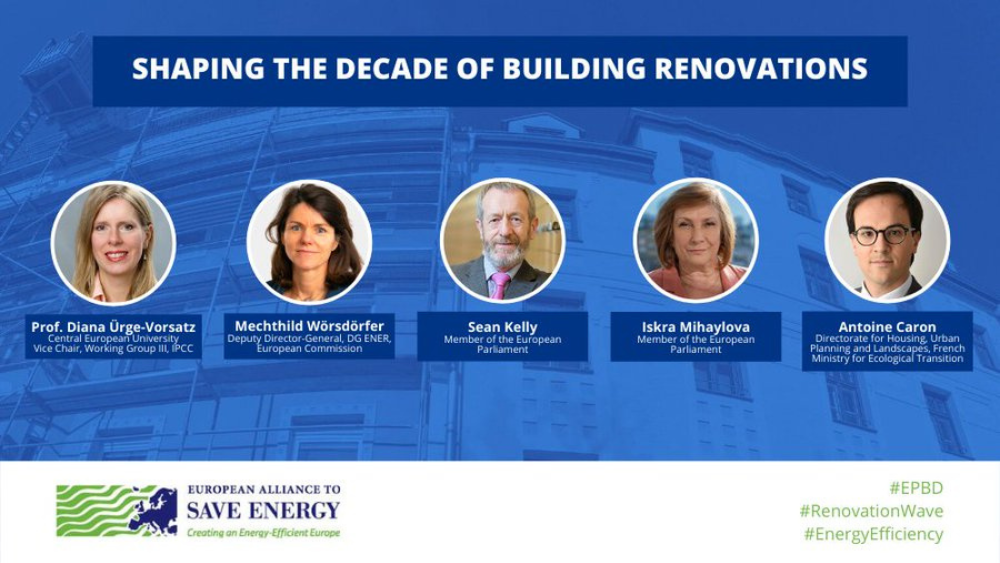
Speakers:
- Prof. Dr. Diana Urge Vorsatz, Vice Chair of WG III of the IPCC, Central European University
- Mechthild Wörsdörfer, Deputy Director-General, DG ENER, European Commission
- Sean Kelly, Member of the European Parliament
- Iskra Mihaylova, Member of the European Parliament
- Antoine Caron, Deputy Head of Department, Department for quality and sustainable development in construction, Directorate for Housing, Urban Planning and Landscapes, French Ministry for Ecological Transition
- Monica Frassoni, President, European Alliance to Save Energy (EU-ASE)
EU-ASE is hosting an online workshop on Friday 28 January to talk about the revision of the Energy Performance of Buildings Directive. Three objectives must take priority: increasing energy efficiency, reducing emissions and lowering energy prices.
The European Commission presented its much awaited proposal to revise of the Energy Performance of Buildings Directive (EPBD) in December 2021, the last piece of the legislative package ‘Fit for 55’ to put the Union on track towards climate neutrality.
Buildings are a central aspect of our daily lives, as we spend most of our time indoors. But 75% of buildings in the European Union are not energy efficient, which poses problems to reduce emissions, and many of them will still be standing by 2050. Wasting energy not only has dire consequences for the environment, it also means higher energy bills for citizens and businesses.
The revision of the EPBD proposed by the European Commission acknowledges these challenges and offers a good direction, but more actions are needed to trigger a renovation wave for the EU building stock to be energy efficient.
The high-level event, organised by the European Alliance to Save Energy, is an exchange of views on how to increase energy efficiency and decarbonise buildings while boosting economic growth and create job opportunities.
Watch the recording here